
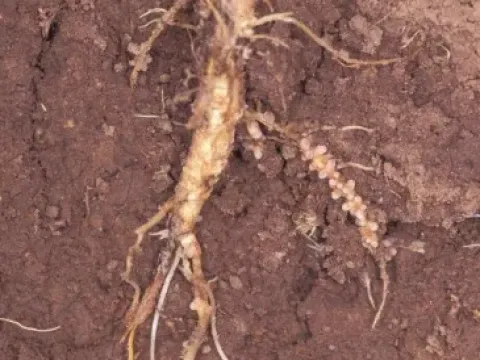
Rhizobium phaseoli
Rhizobium phaseoli
Rhizobium phaseoli is a gram-negative soil bacterium widely recognized for its symbiotic relationship with legumes, particularly the common bean (Phaseolus vulgaris).
What the section contains
Rhizobium phaseoli
It is not a disease-causing agent but a beneficial microorganism. It is responsible for the formation of root nodules where atmospheric nitrogen is converted into ammonia, providing essential nutrients to the host plant.
The bacteria invade the root hair cells of the bean plant, triggering the development of specialized tissues known as nodules. This is a complex biological process involving chemical signaling between the plant and the bacteria.
Confusion between this beneficial organism and true pathogens, such as Pseudomonas species, often arises because both are bacterial in nature and interact with the plant roots.
In modern agricultural science, Rhizobium phaseoli is utilized as a bio-fertilizer to increase crop yields and enhance sustainable soil management practices.
The activity of these bacteria is highly dependent on the presence of the host plant. Root exudates from the common bean are essential for initiating the infection process and nodule development.
Soil pH plays a critical role in their survival and efficiency. Acidic soils tend to inhibit the growth of Rhizobium and restrict their ability to fix nitrogen effectively.
Aeration is crucial; the bacteria require oxygen for metabolic processes, so waterlogged or compacted soils significantly reduce their biological activity and population density.
The optimal temperature for these bacteria ranges from 20°C to 28°C. Deviations from this range can slow down the physiological processes of the bacteria inside the nodules.
Availability of trace elements like molybdenum and iron is necessary for the proper functioning of the nitrogenase enzyme within the bacteria, which facilitates nitrogen fixation.
Rhizobium phaseoli does not cause harm to plants. It is a symbiotic partner that supports plant growth. Potential problems only arise if the symbiosis is ineffective.
Ineffective strains or poor inoculation practices can lead to the formation of nodules that do not fix nitrogen, resulting in a waste of plant energy without any yield benefits.
Excessive use of mineral nitrogen fertilizers is harmful to the symbiosis because it discourages the plant from engaging in a partnership with the bacteria, thus weakening the bacterial community.
Incompatibility with certain chemical seed treatments can also lead to the death of the bacterial population, which might indirectly cause poor nitrogen nutrition in the beans.
The bacteria are entirely safe and are vital for the natural nitrogen cycle in legume cultivation, posing no risk to the health of the host plant or subsequent crops.
Management of Rhizobium phaseoli is focused on promotion rather than control. Agronomists strive to optimize conditions for these bacteria to maximize their beneficial effects.
Seed inoculation with high-quality, viable strains of Rhizobium phaseoli is recommended to ensure robust nodule formation from the very beginning of the plant's life cycle.
Liming soils to maintain a neutral pH is an essential practice that creates the most hospitable environment for the colonization and sustained activity of the bacteria.
Farmers should be cautious with nitrogen fertilization levels; reducing mineral nitrogen intake encourages the plant to rely on the natural, bacteria-mediated nitrogen fixation.
Maintaining a healthy soil structure through proper crop rotation and minimizing soil erosion helps preserve indigenous populations of these beneficial microbes in the fields.