
Ratoon stunting disease
Leifsonia xyli
Description
Symptoms
The primary symptom is a general stunting of the plant, which often results in shorter stalks and shorter internodes compared to healthy counterparts.
Infected sugarcane plants often appear chlorotic or yellowed, although this symptom can be inconsistent and depends heavily on the growing conditions.
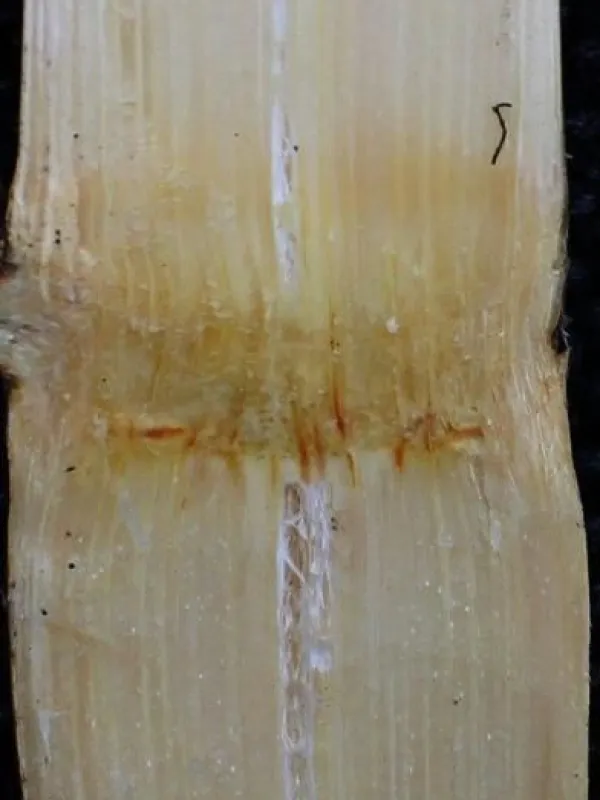
A definitive diagnostic sign is found inside the stalk, where the vascular bundles at the nodes show characteristic pink, red, or dark brown discoloration.
Affected plants exhibit a reduced root system, which makes them highly susceptible to environmental stress, particularly during periods of drought.
The overall crop canopy in infected fields is often uneven, with significant gaps and poor tillering observed in ratoon crops over successive years.
Pathogen
Ratoon stunting disease is caused by the Gram-positive, xylem-limited bacterium known as Leifsonia xyli subsp. xyli.
This pathogen lives and multiplies within the vascular tissue of the sugarcane plant, specifically in the xylem vessels responsible for water transport.
The bacterium is known for its ability to persist in the host for long periods, often causing latent infections where plants show no outward signs of disease.
Transmission of the pathogen occurs almost exclusively through mechanical means, primarily via contaminated harvesting equipment or infected vegetative cuttings.
Because it is a vascular pathogen, the bacteria can easily be moved throughout the plant by the natural flow of xylem sap, leading to systemic infection.
Conditions for development
The spread of the disease is heavily facilitated by modern harvesting practices, as machines move through fields, carrying the bacteria on cutting blades.
Warm and moist conditions generally promote the survival of the pathogen in plant debris, increasing the risk of carry-over between seasons.
The use of infected seed cane is the most critical factor in the widespread distribution of the disease, as the bacteria can infect the entire vegetative cutting.
High nitrogen fertilization or rapid growth phases can sometimes mask the symptoms, leading to a false sense of security regarding the health of the field.
Lack of sanitation during the replanting process allows the bacterium to establish itself in new, otherwise healthy fields, perpetuating the infection cycle.
Why it matters
The disease causes significant reductions in yield, often manifesting as a loss of 10 to 30 percent in total biomass and sugar content.
It severely impacts the profitability of ratoon crops, frequently limiting the number of profitable harvests per planting cycle before replanting is required.
Infected fields show decreased tolerance to water stress, which can lead to crop failure or significant mortality during unusually dry growing seasons.
Sugar recovery at the mill is negatively affected due to the compromised quality of the cane juice extracted from diseased stalks.
The economic impact is compounded by the high costs associated with maintaining clean seed sources and implementing rigorous decontamination protocols.
Protection
The cornerstone of control is the use of disease-free planting material, often produced through heat treatment or shoot-tip culture in sterile laboratories.
Hot water treatment of cane sets (typically at 50-52 degrees Celsius for 2-3 hours) is a standard and effective method to eliminate the pathogen.
Strict sanitation procedures, including the disinfection of cutting tools and harvesters with disinfectants, are essential to prevent cross-contamination.
- Routine field monitoring and testing for latent bacterial infections.
- Implementation of robust quarantine measures to prevent movement of infected material.
- Selection of resistant or tolerant varieties to reduce the impact of the pathogen.
Effective management requires a comprehensive approach, combining clean seed programs with farm-level hygiene to break the cycle of mechanical transmission.
Discussion
No discussions yet — be the first.