
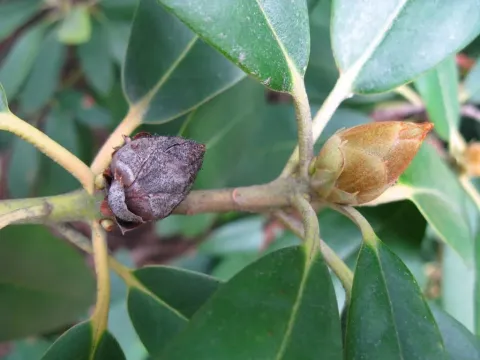
Rhodobacteriosis
Rhodobacter
Rhodobacteriosis is an infectious bacterial plant disease caused by microorganisms of the genus Rhodobacter. While these are primarily phototrophic aquatic bacteria, they can colonize plants in fields with poor drainage or stagnant water conditions.
What the section contains
Rhodobacteriosis
The pathogen functions as an opportunistic microorganism. It primarily enters through plant tissues weakened by stress, mechanical damage, or physiological imbalances, making it a significant concern in high-intensity farming environments.
The biological nature of this bacterium allows it to thrive in low-oxygen environments. Once it invades the vascular system, it disrupts the movement of water and vital nutrients, leading to systematic chlorosis and eventual necrosis of the host plant.
Pathogen dispersal is largely driven by water movement, including irrigation run-off and rainfall. In a field, the bacteria can persist in the soil for extended periods, waiting for optimal conditions to infect the next season's crop.
Scientific studies indicate that Rhodobacter strains can survive in biofilms, which protects them from standard environmental stressors. This durability makes the management of the disease complex and requires multi-faceted agricultural approaches.
Initial symptoms include the appearance of localized chlorotic spots on leaves. These spots often develop a yellow or light-brown tint, reflecting the interference of bacterial metabolites with the plant's photosynthetic capacity.
Stems of affected plants often show signs of water-soaking and softening. Unlike fungal infections that produce fuzzy growth, this bacterial disease typically presents as a smooth, wet, and potentially foul-smelling lesion.
Root systems exhibit distinct signs of decay. As the infection progresses, the roots lose their firmness, turn darker in color, and show reduced root hair development, severely limiting the plant's nutrient uptake capabilities.
In high humidity, a bacterial exudate may be visible on the surface of the infected tissue. This substance acts as a vector for the bacteria, spreading the infection to neighboring plants via contact or splashing water.
Severe infestations cause premature wilting of the plant canopy. The leaves curl, lose their natural elasticity, and drop early, leading to a significant loss of leaf area and total photosynthetic output for the crop.
The primary environmental condition for rhodobacteriosis development is persistent waterlogging. Soil saturated with water creates an anaerobic micro-environment that encourages the growth of these specific bacteria.
Temperatures ranging from 22°C to 30°C provide the thermal optimum for bacterial replication. Warm, wet seasons are usually associated with the highest incidence of the disease in commercial agricultural fields.
Poor crop rotation practices significantly elevate the risk of an outbreak. Continuous planting of the same crop family on infected soil allows the bacterial population to multiply and maintain high inoculum pressure.
Mechanical damage caused by standard field operations, such as hoeing or intensive weeding, creates entry wounds for the bacteria. Improperly maintained equipment can also facilitate the mechanical spread of the pathogen.
Inadequate soil fertility and a lack of essential minerals like calcium contribute to weaker cell structures. Plants that are structurally compromised are more susceptible to the colonization and rapid spread of Rhodobacter.
The economic impact of rhodobacteriosis is primarily due to yield loss. By damaging the vascular system, the pathogen prevents the plant from maturing its fruit or seeds correctly, resulting in smaller and poorer-quality produce.
Post-harvest quality is significantly reduced. Crops affected by this disease often have a shorter shelf life and are prone to accelerated rotting, making them unsuitable for long-distance shipping or storage.
The presence of this pathogen in a field can lead to total crop failure in extreme cases. For farmers, this results in the loss of investment in seeds, fertilizers, and labor, necessitating costly remedial measures.
Furthermore, rhodobacteriosis disrupts the biological balance of the soil. The persistence of the bacteria may restrict the choice of future crops, forcing growers to transition to less profitable species to manage the risk.
The risk of spread to adjacent fields represents a major concern for the local farming community. Effective containment is required to prevent the contagion from entering neighboring agricultural zones.
Improving field drainage is the most critical preventative measure. Installing subsurface drainage systems or leveling the field prevents water stagnation and ensures sufficient oxygen levels in the soil for healthy root development.
The use of certified, disease-resistant cultivars is a fundamental strategy. Breeding programs often focus on strengthening the plant's physical barriers to bacterial invasion, providing natural protection against the pathogen.
Rigorous sanitation of all agricultural tools and machinery is essential. Disinfecting blades and tires between different sections of the field helps to break the cycle of mechanical transmission.
Applying biological control agents that contain antagonistic bacteria can help suppress the population of Rhodobacter. These beneficial microbes compete for resources and space, limiting the growth of the pathogen.
- Implementation of a 3-year crop rotation cycle
- Deep plowing to reduce inoculum in crop residues
- Monitoring fields for early signs of infection
- Balanced nutrient management to strengthen cell walls