
Rathayibacter rathayi
Rathayibacter rathayi
Description
Symptoms
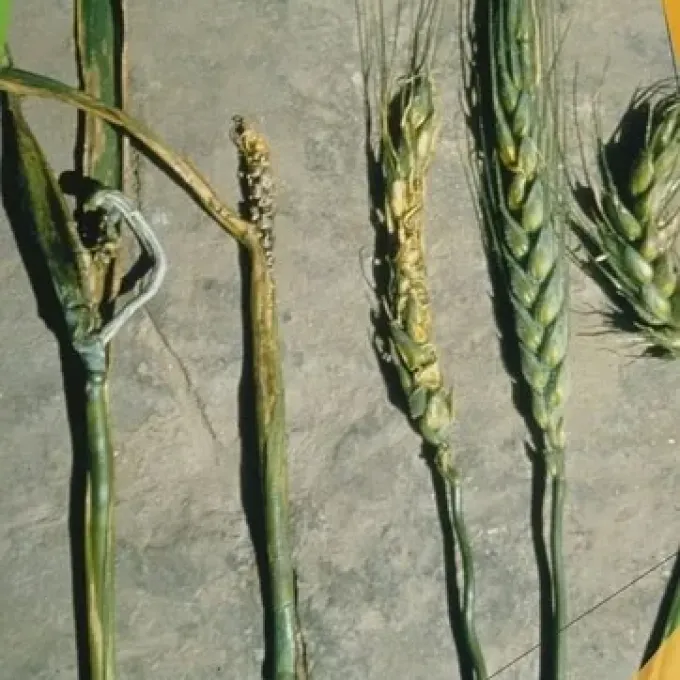
Initial symptoms typically appear during the jointing and heading stages of plant growth. A characteristic sign is the presence of yellow slimy masses or glossy coatings on leaves and leaf sheaths.
Infection of the inflorescence leads to the deformation of heads and panicles, which often become twisted and distorted. Galls filled with bacterial exudate develop within the florets.
As the disease progresses, the inflorescence becomes covered in a sticky secretion that eventually dries into a shiny film. This severely hinders flowering and the formation of viable grains.
Infected plants exhibit reduced photosynthetic efficiency, leading to stunted growth and chlorosis. Leaves may yellow and die prematurely, significantly reducing the forage quality of the crop.
- Yellowing and twisting of leaves;
- Presence of bacterial exudate on flower heads;
- Deformation and twisting of reproductive shoots;
- Development of galls in seed material;
- Overall suppression of vegetative growth.
Pathogen
The disease is caused by the Gram-positive bacterium Rathayibacter rathayi (formerly known as Corynebacterium rathayi). This obligate phytopathogen specializes in infecting various species within the Poaceae family.
The microorganism is primarily transmitted through contaminated seeds, where the bacteria can remain viable for extended periods. It can also spread through crop debris left in fields after harvesting.
In nature, the pathogen's spread is often linked to the activity of specific vectors, such as nematodes of the Anguina genus. Bacteria attach to the surface of these nematodes, which facilitate their entry into host plant tissues.
Biologically, this pathogen is classified as a quarantine organism in many regions because it causes severe deformation of the reproductive organs in grasses. The bacteria colonize the intercellular space and actively produce extracellular polysaccharides.
In agronomic practice, Rathayibacter rathayi requires strict phytosanitary oversight. Controlling the disease depends heavily on laboratory diagnostics to ensure the health of seed stocks.
Conditions for development
Cool and humid weather conditions during critical stages of grass development favor the disease. High relative humidity provides the optimal environment for the bacteria to multiply on plant surfaces.
The presence of specific nematode vectors in the agroecosystem is critical for widespread outbreaks. Without these organisms, the natural transmission efficiency of the pathogen is significantly curtailed.
The infection process is most active in dense stands, where poor aeration keeps foliage wet for longer periods. This microclimate creates ideal conditions for bacterial colonization.
Temperatures ranging from 15 to 22 degrees Celsius are considered most favorable for the metabolic activity of Rathayibacter rathayi. Under these conditions, the incubation period shortens, and symptoms emerge rapidly.
Cultivated grasses, such as orchardgrass, are highly susceptible to this pathogen. When favorable environmental factors align, epiphytotics can sweep across large fields in a short timeframe.
Why it matters
The economic impact of this bacteriosis stems from substantial losses in both quality and quantity of seed yield. Infected inflorescences often fail to produce viable grain, making the seed crop useless.
In pasture and forage production, the disease significantly reduces green biomass yield. The fodder quality declines due to changes in plant biochemistry and the presence of toxic bacterial byproducts.
Infection causes significant financial losses due to the required rejection and destruction of contaminated seed lots. This creates major hurdles for the international trade of agricultural commodities.
The accumulation of the pathogen in soil and plant debris complicates the use of infested land for future susceptible crops. This often forces farmers to adopt restrictive crop rotations.
Because the disease often affects wild grasses, Rathayibacter rathayi maintains persistent natural reservoirs of infection, making complete eradication in a region an extremely difficult task.
Protection
The primary control strategy is the exclusive use of healthy, certified seed material. Stringent laboratory testing allows for the detection of bacterial presence at early stages, preventing the sowing of contaminated seeds.
Implementing a proper crop rotation that excludes susceptible grasses for at least 2–3 years is an essential agronomic practice to break the disease cycle through the soil.
Managing the nematode vectors is a vital link in the protection system. Using appropriate insecticides and nematicides can significantly lower the rate of bacterial transmission in the field.
Deep plowing of crop residues and timely soil cultivation promote faster decomposition of organic matter, which reduces the pathogen's survival time and the overall inoculum level in the plot.
If infection clusters are detected, immediate mowing of the affected area before seed formation is necessary. Destroying the biomass prevents the further spread of bacteria to neighboring fields.
Discussion
No discussions yet — be the first.