
Rhodococcus
Rhodococcus
Description
Symptoms
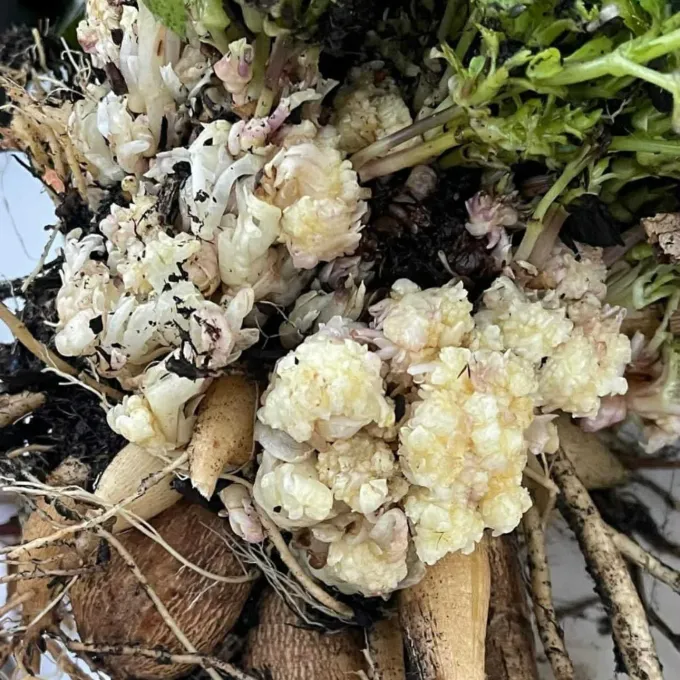
The hallmark symptom of Rhodococcus fascians infection is fasciation. This manifests as flattened, ribbon-like stems or thickened, distorted growth patterns.
Another common manifestation is the "leafy gall," where dense clusters of small, undeveloped shoots and leaves grow near the base of the plant or at the nodes, resembling a witches' broom.
Affected leaves often show chlorosis, reduction in size, and severe curling. Internodes are frequently shortened, resulting in a stunted or dwarf habit for the entire plant.
Flowering plants often display malformed buds that fail to open correctly, or produce abnormal flower structures due to the systemic interference with plant hormone signals.
Root systems may also be impacted, showing stunted primary roots and excessive, abnormal branching, though these symptoms are less frequently observed than foliar distortions.
Pathogen
The causal agent of this disease is the Gram-positive soil bacterium Rhodococcus fascians. It is a well-known plant pathogen that alters the host's hormonal regulation.
The bacterium carries a specific virulence plasmid that triggers the synthesis of cytokinins. These phytohormones cause abnormal, excessive cell division, leading to the characteristic deformities.
This pathogen is a facultative parasite, meaning it can survive as an epiphyte on the plant surface or in the soil for extended periods before causing visible infection.
Infection is primarily spread through infested cuttings, nursery stock, or contaminated irrigation water. It thrives in environments where plants are propagated vegetatively.
The bacteria gain entry into the plant tissues through natural openings or wounds created during agricultural practices such as pruning, trimming, or transplanting.
Conditions for development
High humidity and moisture on plant surfaces are the primary environmental drivers for the development and spread of rhodococcus infections in greenhouses.
Optimal temperatures for bacterial proliferation and colonization of host tissues typically range between 20°C and 28°C, which is common in professional greenhouse settings.
Overcrowded conditions and poor air circulation allow the bacteria to easily transfer between plants through splashing irrigation water or direct physical contact.
Excessive nitrogen fertilization promotes rapid, soft tissue growth that is highly susceptible to bacterial colonization and invasion by the pathogen.
Mechanical injuries caused by standard horticultural practices provide direct entry points for the bacteria, significantly increasing the probability of a successful infection.
Why it matters
The economic impact of rhodococcus is severe, particularly for the nursery and ornamental plant industries, as infected plants are rendered unsalable due to their deformity.
The disease causes profound disruption to the plant's physiological functions, as the disorganized vascular tissue struggles to transport water and nutrients efficiently.
Plants harboring the bacteria act as reservoirs, making it difficult to maintain clean propagation stock if rigorous screening and sanitation protocols are not in place.
There is no practical cure for plants exhibiting advanced signs of fasciation; therefore, the entire batch must often be destroyed to prevent further spread.
The disease weakens the host's overall vitality, making it more susceptible to opportunistic secondary infections, which further complicates diagnosis and management.
Protection
Management relies heavily on sanitation and exclusion. Infected plants must be identified, removed, and destroyed by burning to eliminate the inoculum source.
Tools used for pruning or propagation must be disinfected thoroughly using alcohol, bleach solutions, or heat treatment after every use to prevent mechanical transmission.
Sourcing plant material from reputable, certified nurseries that practice strict phytosanitary standards is the most effective way to avoid introducing the pathogen.
Chemical control with copper-based bactericides has limited curative effect and should be used only as a preventive measure to reduce the bacterial population on surfaces.
- Practice strict quarantine for all new plant arrivals.
- Improve greenhouse ventilation to reduce leaf moisture.
- Use sterile substrates and clean pots for all propagations.
- Avoid overhead irrigation where possible.
- Routinely monitor stock for early signs of distortion.
Discussion
No discussions yet — be the first.