

Blue mold
Penicillium
Description
Symptoms
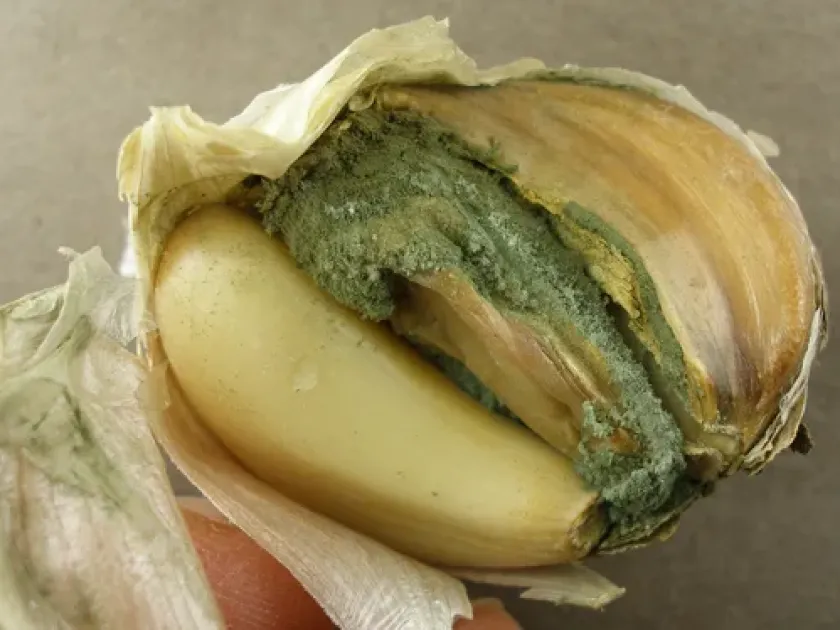
The first signs of blue mold are small, watery, discolored spots on the skin of the fruit or bulb. These spots enlarge rapidly as the fungal mycelium colonizes the underlying tissue.
Within a few days, the surface of the lesions becomes covered with a powdery mass of spores. This characteristic blue-green or turquoise appearance is the hallmark of the disease, giving it the name blue mold.
Internally, the tissue softens and turns into a watery, mushy mass, often emitting a musty, moldy odor. In bulbs like garlic or onions, the decay often starts at the base or the neck.
On citrus fruits and other produce, the skin becomes fragile and may rupture, releasing clouds of spores into the air. In severe cases, the entire fruit can mummify or disintegrate completely.
In humid conditions, the mycelial growth is white and fluffy initially, turning to the signature blue-green color as sporulation begins. This spread can quickly turn a sound crate of produce into a rotting mess.
Pathogen
Blue mold is caused by fungi of the genus Penicillium, which are ubiquitous saprophytes found in soil, air, and decaying organic matter. These fungi are highly opportunistic and can attack a vast range of plant species.
Common hosts include onions, garlic, asparagus, papaya, citrus fruits, watermelons, strawberries, and sweet potatoes. The pathogen reproduces primarily through airborne conidia, which spread rapidly across storage facilities.
Infection typically occurs through mechanical wounds, bruises, or cracks in the plant tissue sustained during harvesting, handling, or transportation. The fungi produce enzymes that break down cell walls, leading to rapid decay.
Penicillium species are remarkably resilient and can persist for years on the surfaces of wooden crates, walls, and in field soil. This durability makes them a persistent threat to agricultural production systems.
Many Penicillium species produce mycotoxins as they colonize plant tissues, which poses significant food safety risks. Consequently, infected produce is generally considered unsuitable for consumption.
Conditions for development
High relative humidity, typically exceeding 85–90%, is the most critical environmental factor that triggers the rapid development of blue mold infections.
While temperatures between 15°C and 25°C are often optimal, Penicillium species are highly versatile and continue to grow at cooler temperatures, making them a major problem in refrigerated storage.
Poor aeration in storage facilities leads to the accumulation of moisture on produce surfaces, creating an ideal environment for spore germination and rapid colonization.
Mechanical damage to the produce during harvesting serves as the primary entry point. Any break in the skin allows the fungus to bypass the natural defenses of the plant fruit.
Contaminated storage infrastructure, such as reused boxes or uncleaned rooms, provides a constant source of inoculum, significantly increasing the probability of a disease outbreak.
Why it matters
The economic impact of blue mold is substantial, as it causes massive post-harvest losses, potentially destroying entire batches of fruit and vegetables in a short time.
In addition to physical loss, the presence of mycotoxins in the tissue renders the produce worthless and potentially hazardous, preventing its sale or use in food processing.
The rapid spread of spores from infected units to healthy ones in a storage container can escalate a minor contamination issue into a widespread epidemic within a few days.
The damage to the crop's appearance and quality makes it impossible to market the produce, leading to total financial loss for growers and distributors.
Management of the disease is labor-intensive, requiring constant monitoring of storage conditions and the disposal of infected materials, which adds to operational costs.
Protection
- Maintain strict hygiene in storage facilities by disinfecting walls, floors, and equipment.
- Ensure proper ventilation and humidity control to prevent moisture buildup on produce.
- Handle produce with care during harvest to avoid mechanical injury or skin abrasions.
- Inspect produce thoroughly before storage and remove any damaged or already infected items.
- Apply authorized post-harvest fungicides or biological control agents to protect the crop during long-term storage.
In brief
25
Affects crops
Biology
Pathogens and affected parts
Pathogens
Penicillium· fungus
Penicillium expansum· fungus
Penicillium italicum· fungus
Penicillium aurantiogriseum· fungus
Penicillium digitatum· fungus
Penicillium ulaiense· fungus
Penicillium chrysogenum· fungus
Penicillium cyclopium· fungus
Penicillium glaucum· fungus
Penicillium funiculosum· fungus
Penicillium oxalicum· fungus
Penicillium verrucosum· fungus
Affected plant parts
whole plantfruitearseed
Content graph
Affects crops · 25
Content graph
Connections · Blue mold
Most often together:
Marketplace
Products · 1
Community
Discussion
No discussions yet — be the first.