
Description
Symptoms
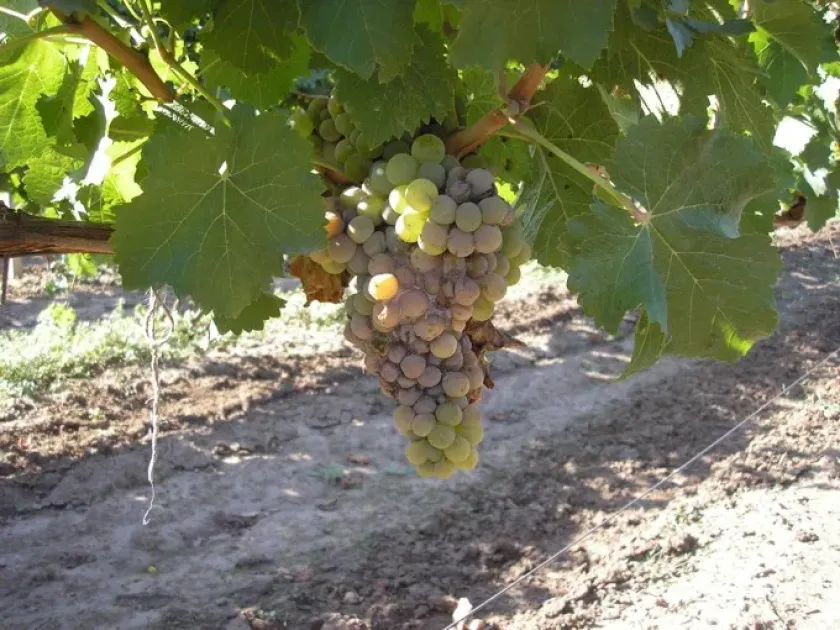
The first noticeable sign is the appearance of a powdery growth on the berry surface, which eventually turns a dark brown or black color.
Affected berry areas soften and rapidly decay. The rot spreads throughout the cluster, turning it into a mass covered with fungal spores, accompanied by a distinct musty, moldy odor.
In the early stages, the infection may be visually subtle; however, under high humidity conditions, the fungal growth becomes dense and clearly visible.
The internal tissues of the berries lose their structure and become watery, leading to berry shedding upon contact or exposure to wind.
A typical symptom is the rapid infection of adjacent healthy berries within the cluster, which often results in the total destruction of the entire bunch within a few days.
Pathogen
The causal agent of this disease is the microscopic fungus Aspergillus aculeatus. This pathogen belongs to the mold fungi group and acts as a facultative parasite that attacks plant tissues under favorable conditions.
This fungus is widespread in soil and plant debris, from where its spores are disseminated by wind or insects. It possesses high enzymatic activity, allowing it to quickly degrade the structural integrity of berries.
The disease primarily affects Vitis vinifera, particularly ripening and mature clusters. The pathogen penetrates the tissues through micro-cracks in the berry skin or wounds caused by insect pests.
Fungal development is closely linked to the physiological state of the berries, as the increase in sugar concentration creates an ideal medium for its active growth. During its life cycle, the fungus secretes specific toxins.
It is important to note that Aspergillus aculeatus can develop both in field conditions and during post-harvest storage, maintaining high viability across various temperatures.
Conditions for development
High humidity is the primary factor for disease development, especially during the ripening period when berry skin becomes thin and susceptible to micro-cracking.
High temperatures facilitate rapid spore germination and tissue colonization, making hot and humid weather a critical risk period for infection.
Mechanical injuries caused by hail, sunscald, or insect feeding provide entry points for the pathogen and significantly increase the risk of infection.
Dense foliage that inhibits airflow creates pockets of stagnant humid air, which promotes the quick spread of the disease within the grapevine canopy.
Poor agricultural practices, including delayed harvesting or leaving damaged berries on the ground, encourage massive spore production within the vineyard environment.
Why it matters
The primary economic harm is the substantial loss of marketability, rendering the harvested grapes unsuitable for sale on the fresh market.
Fungal infection significantly degrades the quality of grape must, imparting an unpleasant musty off-flavor to the final wine product that is difficult to remediate.
The activity of Aspergillus aculeatus is often associated with the accumulation of mycotoxins, which poses potential health risks for human and animal consumption.
The disease drastically reduces the shelf life of grapes after harvest, as infection centers expand rapidly during storage at ambient temperatures.
Economic losses include not only direct crop failure but also the increased labor costs for strict cluster sorting during harvest, as well as the potential rejection of entire batches.
Protection
The foundation of prevention is maintaining good canopy ventilation through regular pruning, shoot thinning, and proper grapevine training.
It is essential to strictly monitor and control insect pests that damage berry skins, as their feeding activity is a major facilitator of primary infection.
Timely harvest and the removal of fallen or diseased berries from the plot reduce the inoculum pressure and prevent the accumulation of spores in the soil.
- Maintaining optimal irrigation to prevent berry cracking.
- Using grape varieties with resistance to berry splitting.
- Application of authorized fungicides according to labels.
- Rapid cooling and processing of grapes post-harvest.
In cases of high disease pressure, targeted use of broad-spectrum fungicides permitted for viticulture is necessary, provided that pre-harvest intervals are strictly observed.
Pathogens and affected parts
Affects crops · 1
Discussion
No discussions yet — be the first.