
Dark olive mold
Cladosporium herbarum
Description
Symptoms
Symptoms initially appear as small spots on leaves, stems, or fruits, which gradually develop into a velvet-like coating of dark olive or black spores.
Severely infected leaves often show necrosis, leading to premature wilting and abscission, which drastically reduces the plant's capacity for photosynthesis.
Fruit infection manifests as discolored spots that rapidly expand into soft, moldy decay, rendering the harvest unmarketable and susceptible to further rot.
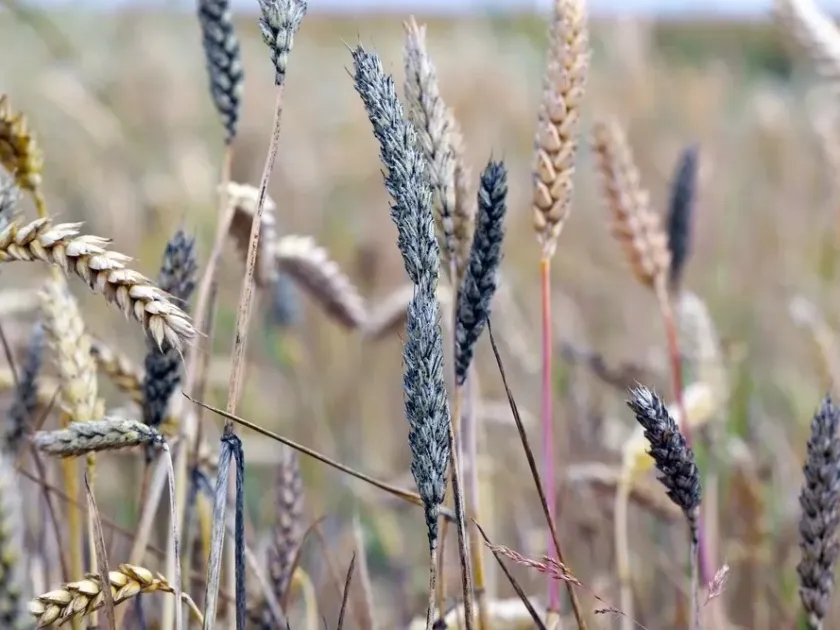
In cereal crops, the disease is known for causing "black ear," where the spikes become covered in a dark, dusty layer of spores, preventing proper grain development.
The presence of the mold is often accompanied by a distinct musty odor, especially in dense plant canopies where humidity is trapped and airflow is stagnant.
Pathogen
The causal agent of this disease is the imperfect fungus Cladosporium herbarum, classified as a hyphomycete that behaves as a saprotroph and occasionally as a pathogen.
The fungus produces conidiophores that release numerous dark olive to brown spores, which are easily transported by wind or water splashes to healthy plant tissues.
It persists over the winter season as mycelium on crop residues, in the soil, or on infected seed lots, facilitating early-season outbreaks when conditions allow.
Cladosporium herbarum has a wide host range, commonly attacking cereals, vegetables, and fruit trees, demonstrating high adaptability to various host environments.
The fungus colonizes plant cells by breaking down dead or damaged tissue and can quickly invade healthy parts if the plant's natural defense systems are compromised.
Conditions for development
Dark olive mold thrives in high-humidity environments, typically requiring relative humidity levels of 80% or higher for optimal spore germination and colonization.
Warm temperatures ranging from 20°C to 25°C are ideal for the rapid proliferation of the mycelium and the production of massive quantities of airborne conidia.
Poor ventilation and overcrowded planting density create microclimates that trap moisture on leaf surfaces, providing perfect conditions for the pathogen to establish.
Frequent rainfall or heavy fog provides the necessary surface moisture for the fungus to transition from its dormant phase to an active infectious state.
Plant stress, often caused by nutrient imbalances or previous pest damage, significantly lowers the plant's resistance and increases susceptibility to infection.
Why it matters
The primary harm caused by this pathogen is a significant reduction in biomass and yield due to the destruction of foliage and impaired plant physiology.
Crop quality suffers greatly, as infected fruits and grains exhibit poor appearance, decreased storage life, and an increased risk of mycotoxin contamination.
Cereal producers face losses in grain weight and seed quality, as the fungus disrupts the filling process and often leaves the grain shriveled or discolored.
In greenhouse settings, an outbreak of Cladosporium herbarum can spread rapidly through the entire facility, leading to severe economic losses if not contained.
Additionally, the mold weakens the plant's overall health, making it much more vulnerable to secondary infections from other bacterial or fungal pathogens.
Protection
Effective management begins with deep plowing or sanitation practices to destroy crop residues where the fungus survives during the off-season.
Implementing a rigorous crop rotation plan helps break the life cycle of the pathogen and prevents its build-up in the soil profile over consecutive seasons.
Maintaining proper plant spacing and ensuring good ventilation in greenhouses are critical to reducing the humidity levels that favor fungal growth.
Application of fungicides, such as those with systemic or contact modes of action, is recommended as a preventative measure in high-risk zones.
Early identification and the removal of infected plants can stop the spread of spores, helping to keep the overall level of infection under manageable thresholds.
Discussion
No discussions yet — be the first.