
Description
Symptoms
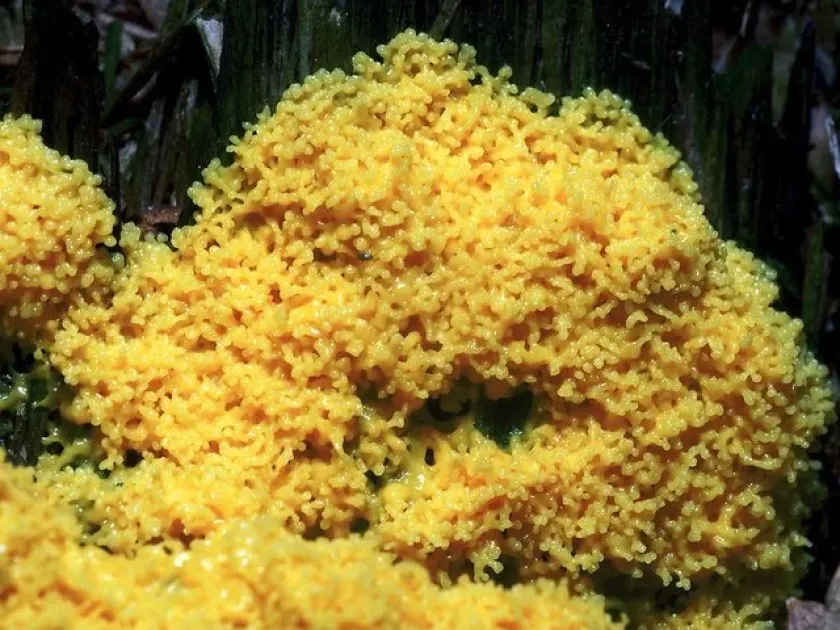
The most recognizable sign is the emergence of a bright yellow, orange, or white frothy mass, often referred to as "dog vomit slime mold" due to its distinct appearance.
Over time, this soft, jelly-like mass dries out and transforms into a crusty, spongy structure, often turning grey, brown, or black as it releases spores.
When it affects crops like strawberries or sweet potatoes, the slime mold coats the stems, petioles, or fruits that touch the damp soil, creating a noticeable, messy layer.
On orchids such as Cattleya, Fuligo often colonizes the bark medium and covers the aerial roots, creating a physical barrier that restricts gas exchange and moisture uptake.
The transformation from a bright, active colony to a dull, powder-filled fruiting body can occur rapidly under changing environmental conditions.
Pathogen
Fuligo, most notably the species Fuligo septica, is not a true fungus but a myxomycete, commonly known as a slime mold, which exhibits complex life stages.
In its active vegetative stage, it forms a plasmodium — a mobile, multinucleated mass that lacks cell walls and actively moves across substrates feeding on bacteria and organic matter.
As a saprotrophic organism, it primarily thrives on decaying organic material, but it can occasionally colonize living plant parts, causing structural and physiological disruptions.
The biological resilience of Fuligo is significant, as it can transform into a sclerotium, a dormant, hardened state that allows it to survive extreme drought or cold for extended periods.
It is commonly found in damp environments, on rotting wood, organic mulch, moist greenhouse soils, and orchid bark substrates.
Conditions for development
High humidity and moisture levels in the soil or air are the primary drivers for the growth and spread of this myxomycete.
Mild temperatures ranging between +15°C and +25°C combined with stagnant air provide the optimal conditions for the plasmodium to expand rapidly.
The presence of excess raw organic matter, such as uncomposted bark or wood chips, significantly increases the likelihood of colonization.
Poorly drained sites or shady areas of the garden where moisture accumulates throughout the day are frequent hotspots for Fuligo outbreaks.
Lack of proper ventilation in greenhouses is another critical factor that allows the slime mold to thrive and persist on container-grown plants.
Why it matters
The primary damage caused by Fuligo is the physical blockage of plant pores, which inhibits photosynthesis and disrupts the essential respiratory processes of the leaves.
On food crops like strawberries and sweet potatoes, the presence of the mold reduces marketability and creates favorable conditions for secondary bacterial decay.
The colonization of roots in orchids hinders water and nutrient absorption, which can lead to stunted growth and, in severe cases, the death of the root system.
While not a primary pathogen like viruses or fungi, the constant presence of the slime mold signals an overly damp environment, which is a precursor to more severe plant diseases.
The enzymes secreted by the organism during its feeding phase may accelerate the breakdown of delicate plant tissues if the colony remains unchecked.
Protection
The most effective management strategy is to optimize irrigation practices, ensuring the soil has sufficient drainage and does not stay constantly waterlogged.
Physical removal of the visible slime mold masses and the contaminated substrate layer is essential to prevent the spread of spores to other areas of the garden.
Improving air circulation through wider plant spacing and better greenhouse management will significantly lower the humidity levels favored by the slime mold.
Using copper-based fungicides can help in some cases, though prevention remains the most effective tool, as myxomycetes are often resistant to standard fungicidal treatments.
- Maintain proper air circulation around plants
- Use only well-composted organic mulch
- Regularly sanitize garden tools to prevent cross-contamination
- Improve soil structure to prevent water stagnation
- Expose damp areas to more sunlight where possible
Pathogens and affected parts
Affects crops · 3
Discussion
No discussions yet — be the first.