
Strawberry nematode
Aphelenchoides fragariae
Description
How to identify
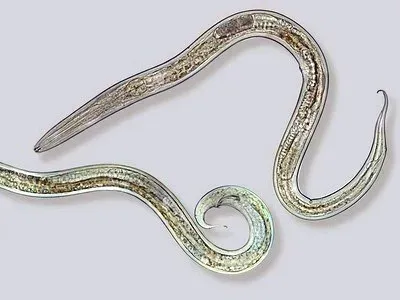
The strawberry nematode (Aphelenchoides fragariae) is a microscopic foliar nematode belonging to the class Chromadorea. It is a highly specialized plant parasite that infests the aerial parts of a wide range of plants.
Unlike root-knot nematodes, this species lives primarily in the foliage, buds, and crown of the host plant. They are translucent, worm-like organisms that require high humidity or water films to migrate between tissues.
The life cycle of A. fragariae is relatively short, often completed in 10 to 14 days under warm and moist conditions. This allows for rapid population growth during the growing season.
These nematodes feed by inserting their stylets into plant cells to extract nutrients. This feeding process causes cellular damage and disrupts the hormonal balance of the plant host.
Survival strategy includes the ability to enter a state of cryptobiosis. When conditions become dry, they can persist in plant debris or soil for long periods until moisture returns.
What it damages
The primary economic host is cultivated strawberry (Fragaria x ananassa). However, it also attacks many ornamental plants, such as African violets, lilies, begonias, and ferns.
Feeding damage in the crown of the plant disrupts the production of new leaves and reproductive organs. This often leads to the death of the main growing point and loss of plant vigor.
In strawberry fields, the presence of these nematodes causes a significant reduction in berry yields. The fruit is often malformed, small, and unmarketable, leading to heavy losses for farmers.
Secondary infections occur because the damaged tissue is highly susceptible to opportunistic bacteria and fungi, which further worsen the symptoms and expedite plant decline.
The cumulative damage often results in the need to rogue out entire patches of strawberries, leading to severe financial losses and the requirement for total field renovation.
Signs of infestation
The most common symptom is the 'cauliflower' or 'crimping' effect on young leaves. Leaves appear distorted, thickened, wrinkled, and often have a darker green color than healthy foliage.
Shortened petioles and flower stalks are characteristic of heavily infested plants. The plant assumes a stunted, bushy appearance, often losing its typical habit of growth.
In ornamental plants like ferns, symptoms manifest as angular, dark brown or black lesions on the leaves, which are bounded by the leaf veins and turn necrotic as the infection spreads.
Buds may fail to open or, if they do, the flowers are severely deformed. This prevents the plant from producing normal fruit or seeds, significantly lowering its aesthetic or agricultural value.
Plants often exhibit general senescence during the growing season, showing reduced resistance to winter cold, which often leads to plant death during dormant periods.
Control measures
Strict sanitation is the cornerstone of management. Only certified pest-free planting material should be used to prevent the introduction of the nematode into new fields.
Hot water treatment is a standard and effective practice. Dipping dormant strawberry crowns in 45–48°C water for approximately 15 minutes is highly successful in killing nematodes.
Effective weed control is essential because many common weeds can act as alternative hosts, maintaining the nematode population even in the absence of the primary crop.
If an infestation is discovered, affected plants must be physically removed and burned immediately. Do not compost these plants, as the heat may not be sufficient to kill the nematodes.
Chemical control options are generally limited and often inefficient for foliar nematodes. Therefore, integrated management relying on prevention and crop rotation is the most recommended approach.
Causes diseases · 1
Discussion
No discussions yet — be the first.