
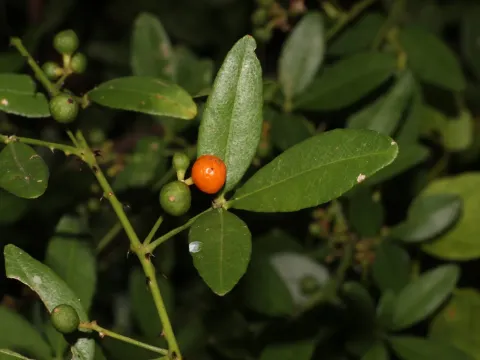
Toddalia aculeata
Toddalia aculeata
Toddalia aculeata, commonly known as forest pepper, is a woody climbing shrub belonging to the Rutaceae family. It is widely recognized for its trifoliate leaves and thorns, and it is native to the tropical forests of Asia and Africa.
What the section contains
Toddalia aculeata
Propagation is primarily carried out through seeds. Seeds should be sown in a well-draining, nutrient-rich potting medium, ensuring they are kept in a warm environment (20–25°C) to stimulate the germination process.
Once seedlings have developed at least two sets of true leaves, they should be transplanted into larger pots to prevent root competition. The soil must remain consistently moist but not waterlogged during the early growth stage.
In field production, spacing is vital. Plants should be set at intervals of 2 to 3 meters to accommodate their climbing habit and ensure sufficient airflow, which helps in preventing canopy diseases.
The hardening-off process is essential before transplanting into the field. Gradually exposing young plants to outdoor conditions over a week ensures they adapt better to fluctuating temperatures and sunlight levels.
Toddalia aculeata thrives in warm, humid climates with well-distributed rainfall. It requires a sunny to semi-shaded location, though optimal growth is observed in areas with high light intensity.
The soil should be deep, loamy, and rich in organic matter. A soil pH ranging from 5.5 to 6.5 is preferred, providing the best nutrient uptake efficiency for this specific species within the Rutaceae family.
Adequate irrigation is crucial during the dry season. While the plant shows some drought tolerance once established, a steady supply of moisture is required to produce high-quality foliage and essential oils.
Mulching is highly recommended to maintain soil moisture levels and suppress weeds. Applying organic compost around the base of the plant provides continuous nutrients and improves the physical structure of the soil.
Protection from strong winds is necessary to avoid mechanical damage to the thorns and branches. Using windbreaks or trellises can significantly enhance the structural integrity of the plant as it matures.
The economic value of Toddalia aculeata lies in its leaves, roots, and bark, which are harvested for traditional medicinal purposes. Yield potential depends on the age of the shrub and the quality of maintenance provided.
Sustainable harvesting of leaves can typically begin in the second or third year of growth. Pruning at the right time helps stimulate the production of new, active-rich foliage, thereby increasing total biomass.
Roots contain higher concentrations of bioactive alkaloids; however, harvesting them requires removing the entire plant, which is why leaf harvesting is considered more sustainable for long-term production.
Proper drying techniques after harvest are critical to preserving the essential oils and medicinal properties. Leaves should be dried in a shaded, well-ventilated area to maintain high quality.
Regular monitoring of plant health and nutrient management can lead to a consistent annual yield of herbal material suitable for various pharmaceutical or cosmetic applications.
The plant is susceptible to various fungal pathogens, especially leaf spot diseases that manifest during periods of high humidity and poor air circulation within the shrub canopy.
Pests like aphids, spider mites, and scale insects frequently infest the plant, feeding on succulent young shoots. Integrated pest management using natural predators or neem-based oil is highly recommended.
Root rot is a common threat in poorly drained soils. Ensuring the planting site has excellent drainage is the most effective preventative measure against these soil-borne fungal issues.
Weed control is essential, particularly in the first year, as competing grasses can drastically reduce the growth rate of Toddalia aculeata by stealing water and mineral nutrients.
Implementing a strict sanitation program—such as removing dead branches and clearing plant debris around the base—helps minimize the overwintering of pathogens and harmful insect populations.