
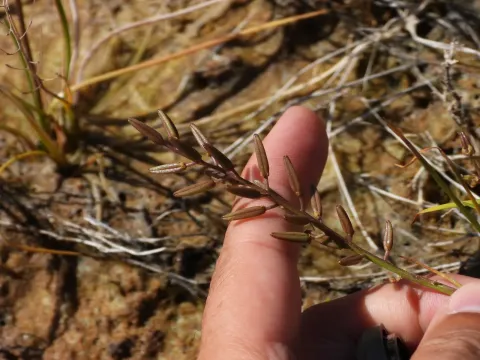
Triglochin barrelieri
Triglochin barrelieri
Triglochin barrelieri is a perennial herbaceous plant belonging to the Juncaginaceae family. This species is primarily identified as a halophyte, perfectly adapted to environments where soil salinity is too high for typical agricultural crops to thrive.
What the section contains
Triglochin barrelieri
The geographic range is centered around the Mediterranean region, where it commonly colonizes salt marshes and coastal wetlands. Its survival strategy involves specialized metabolic processes that allow it to manage high intracellular ion concentrations without succumbing to toxicity.
Botanically, it features a rosette of narrow leaves and a long, erect flowering stalk. The root system is robust and fibrous, optimized for stabilizing the plant in soft, water-logged soils that are often characterized by extreme osmotic stress.
Environmental requirements focus on high moisture levels and adequate sunlight. It does not require high levels of nutrients in the traditional sense, but it is highly dependent on the specific salt balance of its habitat to maintain its competitive advantage over other grasses.
In terms of agricultural and ecological use, Triglochin barrelieri serves as an important indicator of soil health in saline regions. Researchers explore its potential for phytoremediation, as it can accumulate minerals from saline soils, potentially reclaiming them for limited agricultural utility.
The primary threat to the species is habitat fragmentation caused by human development. Construction projects near the coast and the drainage of wetlands directly destroy the micro-environments necessary for the survival of Triglochin barrelieri.
Pathogenic threats include fungal root rots which can become prevalent if the soil drainage becomes stagnant beyond the plant's tolerance levels. Such diseases can spread quickly through dense patches, leading to significant dieback of the vegetation.
While the presence of cyanogenic glycosides provides a chemical deterrent against most pests, some specialized insects may still cause localized damage to the foliage. However, such infestations are rarely fatal to healthy, established populations.
Overgrazing by livestock represents another significant threat, as trampling damages the rosettes and compacts the soil. This prevents the natural propagation of the plant and leaves the exposed soil vulnerable to erosion by wind and tidal action.
Effective management strategies require maintaining a strict equilibrium in water levels and protecting coastal corridors. Preserving these habitats ensures that the unique genetic diversity represented by Triglochin barrelieri continues to contribute to the ecosystem's resilience.