
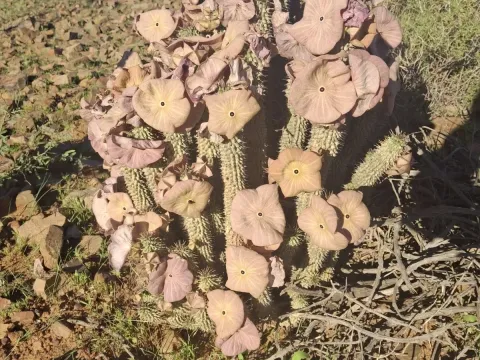
Trichocaulon
Trichocaulon
Trichocaulon is a genus of succulent plants currently classified within the Apocynaceae family, often synonymized with the genus Hoodia. These plants are native to the arid environments of Southern Africa, thriving in rocky, desert-like conditions.
What the section contains
Trichocaulon
These plants are characterized by their columnar or globular stems, which are typically leafless. The stems are covered in tubercles, which frequently bear hardened, spine-like structures that function as a defense mechanism against desert herbivores.
The crop requires intense sunlight for healthy development. In cultivation, it is essential to provide bright, indirect light, though mature specimens can tolerate direct exposure in well-ventilated areas to prevent etiolation and maintain structural integrity.
Soil composition must prioritize drainage above all else. A suitable growing medium consists of a mixture of coarse sand, pumice, or perlite, combined with a small amount of inorganic soil, ensuring that water passes through the pot rapidly without leaving residues.
Watering requirements are strictly seasonal. During the active growing period, the substrate should be allowed to dry out completely before the next irrigation. During winter dormancy, watering should be reduced to an absolute minimum to keep the plant alive.
The most significant threat to Trichocaulon is stem rot, typically caused by excessive moisture or poor aeration. Once the internal tissues are affected by rot, the plant often collapses rapidly, making early detection and preventive drying vital.
Mealybugs are the most persistent pests encountered by growers. These insects hide between the tubercles and spines, drawing sap from the plant. Manual removal with a cotton swab soaked in isopropyl alcohol is effective for minor infestations.
Spider mites are common in low-humidity indoor environments. They can cause scarring on the epidermis of the plant, which is permanent. Maintaining good airflow and periodically checking the plant surface helps in managing potential outbreaks.
Root nematodes pose a severe risk, especially when using non-sterile, contaminated potting media. They damage the root structure, hindering nutrient uptake and often leading to plant stunting. Using sterilized soil substrates is the primary control measure.
Fungal infections can develop in high-humidity conditions without proper air movement. It is advisable to use a small fan or ensure proper placement near open windows to keep the plant surface dry and discourage the growth of pathogenic fungi.