
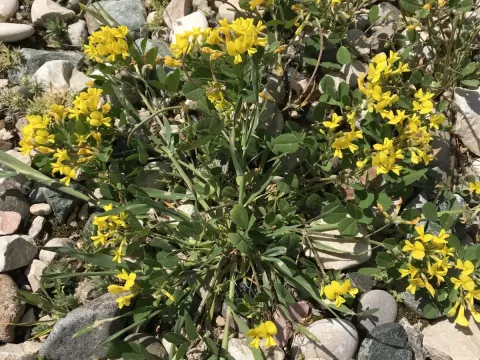
Trigonella noeana
Trigonella noeana
Trigonella noeana belongs to the Fabaceae family. As an annual crop, it is typically sown in the spring when soil temperatures consistently reach 10–12°C.
What the section contains
Trigonella noeana
The ideal sowing window is usually from late April to early May. It is crucial to avoid frost, as seedlings are quite sensitive during their initial emergence phase.
Sowing is conducted in rows spaced 30 to 45 centimeters apart. This spacing is optimal for canopy development and ensures adequate airflow throughout the field.
Seeds should be planted at a depth of 2 to 3 centimeters. Proper soil-to-seed contact and initial moisture levels are vital for achieving uniform and rapid emergence.
The seeding rate ranges between 15 and 25 kilograms per hectare, depending on the desired plant density and the local soil fertility profile.
Originating from arid and semi-arid regions of Western Asia, this species thrives in high sunlight conditions. It is remarkably well-adapted to environments with limited water availability.
The crop prefers light, well-draining soils such as sandy loams. Heavy or waterlogged soils are detrimental, as they frequently lead to root rot and other fungal diseases.
While drought-tolerant, Trigonella noeana requires moderate irrigation during the critical flowering stage to maximize pod development and seed set.
Being a legume, it forms symbiotic relationships with nitrogen-fixing bacteria, reducing the need for synthetic nitrogen fertilizers. Phosphorus and potassium are recommended for higher yields.
Effective weed management is essential during the early weeks of growth. Shallow cultivation between rows helps control weeds without damaging the shallow root system of the crop.
The species is cultivated for both its biomass and seeds. Biomass yields can reach 10 to 15 tons per hectare when agricultural conditions are managed optimally.
Seed yields typically range from 0.8 to 1.5 tons per hectare. Success depends heavily on the timing of irrigation and the absence of extreme weather events during flowering.
The economic value of the crop is derived from its essential oil content, which is highly sought after in the pharmaceutical and food processing industries.
As a rotational crop, it serves to improve soil nitrogen levels for subsequent cereals. Its integration into traditional farming systems supports sustainable agricultural practices.
Global demand for specialty legumes ensures that high-quality production is profitable. Consistent moisture and nutrient management are the primary drivers of yield quality.
Fungal diseases, specifically powdery mildew and various root rots, represent the most significant threat to Trigonella noeana, especially under high humidity.
Pests such as weevils and spider mites can cause substantial damage to the leaves and developing seed pods, leading to significant yield losses if left uncontrolled.
Preventive measures include seed treatments and maintaining a proper crop rotation cycle, with a 3 to 4-year interval between legume plantings on the same land.
Integrated Pest Management (IPM) strategies, including the use of biological controls, are strongly encouraged to maintain environmental health and crop quality.
Regular field scouting is critical for early detection of pathogen outbreaks. Timely intervention can effectively prevent the spread of diseases across the field.
Seed harvesting should commence when pods turn a distinct brown color. Rapid harvest is necessary to prevent natural pod shattering and subsequent seed loss.
For biomass production, the crop should be harvested at the peak of its flowering phase to ensure the highest concentration of phytochemicals in the tissues.
Post-harvest, seeds must be dried in a ventilated area, ensuring temperatures remain below 40°C to preserve the integrity of the volatile oils.
Storage should occur in a cool, dry, and dark environment. Proper storage prevents moisture-induced spoilage and maintains the shelf life of the seeds.
Mechanized harvesting with combine harvesters is standard on large scales, though careful adjustment of the threshing mechanism is required to avoid seed damage.