
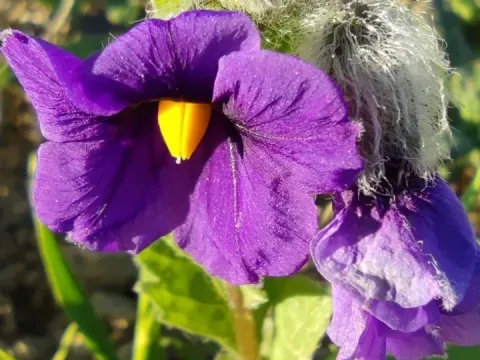
Triguera ambrosiaca
Triguera ambrosiaca
Triguera ambrosiaca is a distinctive annual herb belonging to the Solanaceae family. Known for its deeply lobed leaves that resemble those of common ragweed, it is a specialized plant species adapted to specific Mediterranean environments.
What the section contains
Triguera ambrosiaca
The plant originates from the Mediterranean basin, particularly found in the Iberian Peninsula and parts of Northern Africa. It thrives in open, sunny habitats and is well-adapted to Mediterranean climatic patterns characterized by dry, hot summers.
In terms of soil requirements, Triguera ambrosiaca prefers well-drained, sandy, or rocky soils with a neutral or alkaline reaction. It does not tolerate waterlogged soil, which makes careful site selection essential to avoid root rot and ensure optimal gas exchange at the root zone.
Climatic conditions for the cultivation of this species require high levels of solar irradiance and protection from frost. Being a thermophilic species, it needs a long, warm growing season to complete its life cycle and produce viable seeds.
The agricultural use of this plant is largely restricted to botanical studies and genetic exploration. Its inherent drought tolerance makes it a subject of interest for breeding programs aiming to develop more resilient varieties of agricultural Solanaceous crops.
Pathogens affecting Triguera ambrosiaca are primarily those common to the Solanaceae family. Fungal diseases such as Fusarium wilt and various forms of root rots are major threats, especially if irrigation management is not strictly controlled.
Pests such as aphids and specialized coleopterans pose a significant risk to the foliage and stems. Infestations can lead to stunted growth and reduced seed yield, necessitating regular scouting and monitoring of the crop canopy throughout the season.
Integrated Pest Management (IPM) is crucial for maintaining the health of the plants. This includes crop rotation with non-Solanaceous species to break the life cycle of soil-borne pathogens and ensuring that the surrounding area is free from primary host plants for pests.
Viral diseases represent a serious challenge, as they can be transmitted rapidly by insect vectors. Roguing infected plants immediately upon discovery is an essential practice to limit the spread of viruses within the crop stand.
Chemical control should be applied judiciously, focusing on the early stages of infestation. Whenever possible, biological controls or organic-compliant biopesticides are preferred to preserve the integrity of the plant samples being studied or cultivated.