
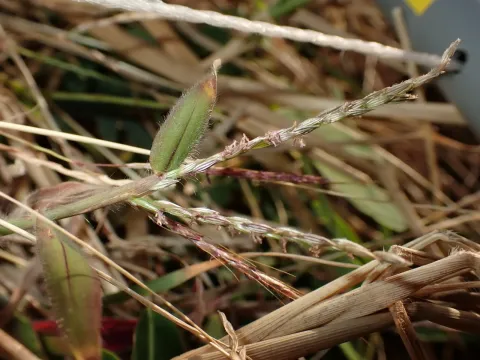
Trichachne
Trichachne
Trichachne is a genus of perennial grasses belonging to the Poaceae family, widely recognized for its importance in forage systems and soil protection.
What the section contains
Trichachne
The sowing process begins when the soil temperature consistently reaches 15 degrees Celsius, ensuring optimal germination conditions.
Proper seedbed preparation is vital, involving deep loosening and leveling to facilitate uniform seed distribution and establishment.
It is generally recommended to sow in rows, allowing for consistent spacing that minimizes competition between individual plants.
Early maintenance, such as protecting the seedlings from extreme dryness and weed pressure, is crucial for the successful establishment of the crop.
The plant thrives in well-drained soils and shows remarkable resistance to low-fertility conditions compared to other cereal grasses.
Full sun exposure is a primary requirement for Trichachne, as it lacks the capacity to compete under significant canopy shade.
While tolerant of dry spells, it achieves maximum productivity when soil moisture is maintained through seasonal rainfall or supplementary irrigation.
Soil pH levels should ideally be maintained in the neutral range to ensure the availability of essential micro and macronutrients for plant growth.
Adequate air circulation is necessary to support its physiological health and prevent the accumulation of humidity within the dense forage canopy.
Trichachne is primarily utilized for grazing and hay production, providing essential roughage for cattle and other ruminants.
Management of the harvest involves balancing the frequency of cutting with the plant's recovery time to ensure long-term stand longevity.
Nutritional value peaks during the late vegetative stage, making this the ideal time for harvesting to obtain high-protein hay.
Grazing intervals should be strictly monitored to prevent overgrazing, which can deplete root reserves and reduce future biomass yields.
With correct management, this grass provides a reliable and sustainable source of forage throughout the growing season.
Rust fungi and smut are common pathological concerns that can significantly diminish both the quantity and quality of the forage mass.
Insect pests, including various types of leafhoppers and beetles, often target the succulent vegetative parts during periods of rapid growth.
Integrated pest management strategies are recommended, focusing on maintaining field hygiene and utilizing resistant varieties where possible.
Environmental stress, particularly prolonged flooding or waterlogging, can trigger root rot and increase the plant's susceptibility to other infections.
Proactive monitoring of fields allows farmers to apply targeted treatments, thus reducing the reliance on broad-spectrum chemicals.