
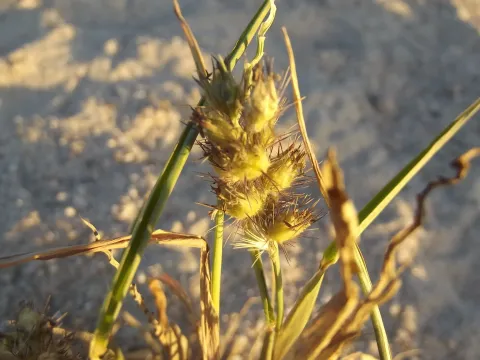
Cenchrus inflexus
Cenchrus inflexus
Cenchrus inflexus is a robust perennial grass belonging to the Poaceae family. This species is recognized for its significant environmental adaptability, allowing it to thrive in diverse soil types ranging from sandy loams to rocky substrates.
What the section contains
Cenchrus inflexus
The plant demonstrates a strong preference for well-lit, sunny environments. It is highly valued for its drought tolerance, a feature facilitated by an extensive root system capable of accessing subsurface water reserves during arid spells.
Optimal growth occurs in a temperature range between +20°C and +30°C. While established plants are hardy, young seedlings require protection from late spring frosts, which can significantly hinder initial biomass accumulation and establishment.
For successful cultivation, the soil pH should be kept within a neutral to slightly alkaline range. Nitrogen-rich fertilizers are particularly effective in promoting rapid tiller development and enhancing the overall density of the grass sward.
Agricultural management must prioritize soil aeration through periodic inter-row cultivation. Proper aeration prevents soil compaction, ensuring that oxygen reaches the roots and facilitating robust nutrient uptake throughout the growing season.
The primary use of Cenchrus inflexus is in the development of high-quality forage pastures. It is prized for its early spring regrowth, which provides essential green fodder at times when other pasture grasses have not yet matured.
The biomass of this crop contains significant amounts of protein and fiber, making it an excellent component of animal feed. Under managed conditions, multiple harvests per season are possible, ensuring high economic returns for livestock farmers.
Beyond its value as fodder, Cenchrus inflexus is frequently utilized for soil conservation purposes. The dense root network forms a strong sod that effectively mitigates erosion on sloping land and helps retain moisture in dry climates.
Successful management requires strict control of grazing intensity to ensure long-term sustainability of the stand. Adopting rotational grazing practices is highly recommended to prevent overgrazing and maintain the productivity of the land.
Yields of dry matter remain competitive with other major forage grasses provided that the crop is well-nourished and water availability is managed effectively. Consistent monitoring ensures that productivity goals are met year after year.
The primary agricultural threats to this crop include fungal pathogens that flourish in humid conditions. Rust and leaf spot diseases can adversely affect the quality of the green matter, necessitating careful moisture management.
Soil-dwelling pests pose a consistent challenge, often feeding on the root system or the base of the stems. Preventive measures, such as proper crop rotation and the use of insect-resistant varieties, are critical for maintaining healthy yields.
Early-stage weed competition is a major obstacle for Cenchrus inflexus establishment. It is imperative to clear the field of weeds prior to planting and maintain a clean field until the grass is sufficiently established to outcompete invasive species.
Poor drainage or waterlogging can lead to root rot infections, which significantly undermine the plant's health. Ensuring that fields are well-drained is a fundamental requirement for disease prevention in this species.
Regular field scouting is essential for early detection of pest or disease outbreaks. When necessary, the application of approved plant protection products can help mitigate risks and safeguard the yield of this valuable fodder crop.