
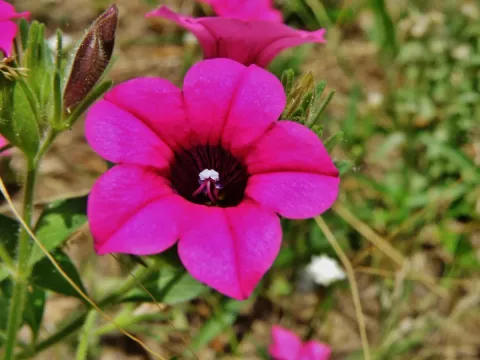
Salpiglossis integrifolia
Salpiglossis integrifolia
Salpiglossis integrifolia, a member of the Solanaceae family, is a delicate annual plant valued for its ornate, trumpet-shaped flowers. It typically requires a head start through indoor sowing in many temperate regions.
What the section contains
Salpiglossis integrifolia
Seeds should be sown in March or early April. Use a high-quality, fine-textured seed starting mix that provides good aeration and moderate moisture retention for the germination process.
Surface sow the seeds, covering them very lightly, as they require some light to germinate effectively. Maintain a consistent temperature of around +20...+22 °C to ensure uniform sprouting.
Prick out the seedlings once they develop their first set of true leaves. As they are sensitive to root disturbance, use biodegradable peat pots to minimize transplant shock during the transfer to the garden.
Transplant the seedlings outdoors only after the frost risk has completely passed and the soil has warmed up, ensuring the plants establish themselves before the peak of the summer heat.
Originating from South American climates, Salpiglossis requires full sun exposure to thrive. Choose a location in your garden that receives at least six to eight hours of direct sunlight daily.
The soil must be fertile, well-draining, and rich in organic matter. Avoid heavy clay soils that retain too much moisture, as this leads to root suffocation and eventual plant failure.
Provide consistent, moderate watering. The root zone should remain slightly moist but never waterlogged. Drip irrigation is often the best method to keep the foliage dry and prevent diseases.
Balanced fertilizers are essential for vigorous growth. However, apply nitrogen with caution; excessive amounts can lead to lush vegetative growth at the expense of the signature floral display.
The ideal temperature range is +18...+25 °C. If temperatures spike, provide adequate spacing for airflow or use mulch to keep the roots cool and prevent moisture loss from the soil surface.
Root rot is the most common threat to Salpiglossis integrifolia, usually caused by overwatering or poor drainage systems. Preventive measures include ensuring the planting site is properly amended.
Aphids and spider mites are frequent pests. These insects target the succulent parts of the plant and developing buds, which can lead to stunted growth and discolored leaves if left untreated.
Powdery mildew may occur if air circulation is restricted or humidity levels remain consistently high around the plants. Proper spacing during initial planting is the best form of cultural control.
Regular inspection of the underside of leaves and stems allows for early detection of pest infestations. Early intervention with organic or chemical solutions can prevent significant damage.
Always follow the label instructions when applying any pest or disease management products to ensure both the safety of the plant and the surrounding environment in your garden.
While primarily grown as an ornamental, Salpiglossis serves as an excellent feature in flower borders, containers, and formal bedding designs due to its vibrant, unique patterns.
For seed collection, wait for the seed capsules to turn brown and begin to dry out. Harvest them before they split open to ensure you capture the tiny, numerous seeds within each pod.
The flowers can be harvested for bouquets. For the best vase life, cut the stems in the early morning when the blooms are just beginning to open, and place them immediately in water.
Deadheading spent blooms is a crucial cultural practice. By removing old flowers, the plant is encouraged to put its energy back into producing new buds rather than setting seeds.
Incorporating this species into a diverse landscape design adds a touch of exotic flair, thanks to the intricate veining on the petals that sets Salpiglossis apart from other annuals.