
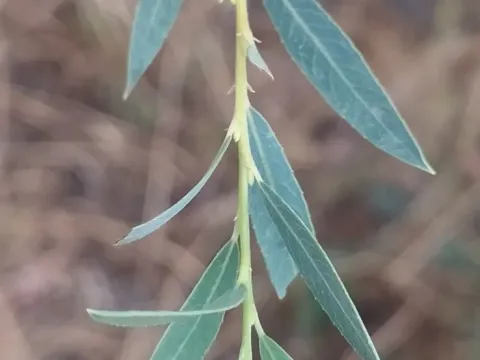
Salix acutifolia
Salix oxica
Salix acutifolia, commonly known as Caspian willow or sharp-leaf willow, is primarily propagated through vegetative methods using cuttings. The ideal time for planting is early spring, before the onset of active sap flow and bud break.
What the section contains
Salix acutifolia
Cuttings should be prepared from healthy one-year-old shoots, typically 20–30 cm in length. It is essential to ensure they are planted in moist, well-prepared soil to encourage rapid root development.
In large-scale commercial plantations for biomass or wicker production, mechanical planting is employed, with densities ranging from 20,000 to 40,000 cuttings per hectare.
Autumn planting is feasible in regions with milder winters, but in colder climates, it poses a significant risk of frost damage to unestablished cuttings during the first winter.
Maintaining a weed-free environment during the first year is crucial, as young willows are sensitive to competition for nutrients and solar radiation.
Belonging to the Salicaceae family, Salix acutifolia is well-adapted to riverine environments and is particularly known for its ability to stabilize sandy soils and dunes.
This species is highly photophilous and requires full sun exposure to produce high-quality, flexible rods. Shade significantly reduces shoot growth and wood quality.
The plant is highly cold-hardy, allowing it to thrive in diverse climatic zones. It is known for its resilience and ability to withstand harsh weather conditions.
While willow is typically associated with wet soils, Salix acutifolia exhibits better drought tolerance than many other willow species, owing to its extensive root system.
Regular fertilization with organic or mineral sources can significantly enhance biomass production, especially during the establishment phase of the plantation.
The primary agricultural output of this crop is high-quality willow rods used in basketry and wickerwork. Intensive cultivation can yield 10–15 tons of dry biomass per hectare annually.
Maximum productivity is typically achieved between the third and fifth years of the plantation cycle, provided that proper pruning and management practices are followed.
The rods of Salix acutifolia are highly prized for their durability, flexibility, and unique reddish appearance, often covered in a characteristic waxy bloom.
Beyond wicker production, the species is widely utilized in phytoremediation projects for soil erosion control, windbreaks, and coastal stabilization.
The harvested biomass also serves as a sustainable source of raw material for solid biofuel production, offering high energy density.
The most significant pathological threats include rust diseases (Melampsora spp.), which affect foliage and young shoots, especially during periods of high humidity.
Major insect pests include leaf beetles, willow sawflies, and various gall midges, which can cause significant damage to the plant's structural integrity and growth rate.
Poor management, such as overcrowding or inadequate ventilation within the plantation, creates a microclimate conducive to fungal pathogen proliferation.
Integrated pest management strategies, including selecting disease-resistant cultivars and maintaining field hygiene, are essential for sustainable crop health.
Chemical control should only be implemented when pest thresholds are exceeded, with strict adherence to environmental regulations and safety protocols.
Harvesting is conducted during the dormant season, typically late autumn after leaf fall or early spring before the buds swell, ensuring the rods are in prime condition.
Mechanical harvesting equipment is used to cut the rods close to the ground, facilitating efficient removal and promoting vigorous regeneration for the following season.
Post-harvest, the rods are sorted by length and diameter, bundled, and moved to well-ventilated storage facilities for drying, which preserves their flexibility.
Proper drying is critical to prevent the bark from cracking or developing mold, ensuring that the raw material remains suitable for intricate weaving processes.
Consistent annual harvesting is key to maintaining the plantation's vitality and ensuring a steady supply of high-grade willow rods for industrial use.