
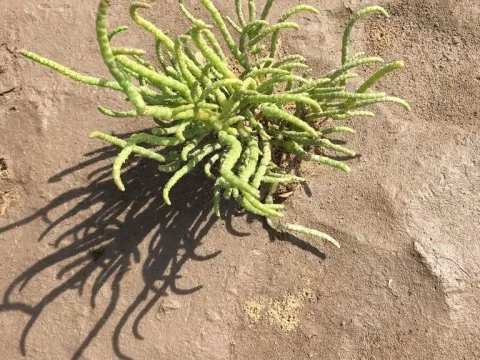
Salicornia fragilis
Salicornia fragilis
The sowing of Salicornia fragilis should be aligned with the local climate, typically occurring in early spring once soil temperatures reach adequate levels.
What the section contains
Salicornia fragilis
Due to the tiny size of the seeds, they are planted at a shallow depth of approximately 1-2 centimeters to ensure successful germination and emergence.
Proper soil preparation is essential, focusing on creating a fine, uniform seedbed to allow for consistent seedling development across the field.
Precision seeding equipment is highly recommended to maintain the optimal planting density required for maximizing crop productivity.
Consistent moisture management during the germination phase is critical, as the small seedlings require stable conditions to establish their root systems.
Salicornia fragilis is a member of the Amaranthaceae family, uniquely adapted to thriving in high-salinity environments where traditional crops fail.
The plant requires full sun exposure and well-drained soils, ideally sandy or loamy, that can handle controlled irrigation with saline water.
An efficient drainage system is necessary to prevent waterlogging, which can lead to excessive salt buildup and subsequent root health issues.
This crop prefers temperatures between 20 and 30 degrees Celsius, which are characteristic of coastal regions where the species naturally occurs.
Irrigation management is the most critical technical aspect, as the specific salt concentration in the water directly dictates the plant's physiological growth rate.
The yield of Salicornia fragilis is strongly correlated with the irrigation water quality and the management of soil salinity throughout the growing season.
Commercial production yields high amounts of succulent green biomass, which is increasingly valued in gourmet culinary and health food markets.
The seeds are a significant product as well, containing high-quality oil that is becoming an alternative for sustainable vegetable oil production.
In addition to human consumption, the plant serves as a potential protein-rich forage crop after undergoing appropriate desalinization treatments.
The crop offers a unique economic advantage by turning non-arable, salt-affected land into productive agricultural assets with low fertilizer requirements.
Despite its toughness in salty conditions, Salicornia fragilis can face significant pressure from fungal diseases if the soil remains excessively wet for long periods.
Insects such as aphids and leaf-eating beetles can cause considerable damage to young plants, potentially impacting the final harvest quality and yield.
Root rot remains the most common threat, often exacerbated by poor drainage and standing water, which encourages the growth of soil-borne pathogens.
Effective disease control is rooted in good agricultural practices, including crop rotation and maintaining proper aeration in the root zone.
Integrated pest management strategies are preferred to ensure the final product remains safe and meets ecological standards for agricultural output.
Harvesting for culinary purposes must take place before the stems become woody, ensuring the crop remains succulent and tender for the end consumer.
For seed production, harvesting is delayed until the seed capsules are fully mature and have reached optimal dryness to facilitate easy threshing.
Mechanical harvesting using specialized headers allows for efficient, large-scale collection of the plant material during the peak of the season.
Post-harvest logistics are vital, as the harvested succulent biomass is highly perishable and requires immediate cooling or processing.
Properly dried and stored products can maintain their nutritional profile and mineral content for extended periods if kept in a cool, dry environment.