
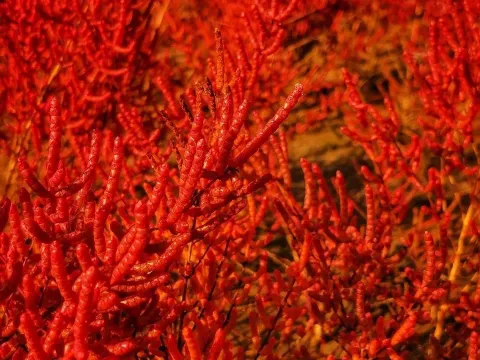
Salicornia stricta
Salicornia stricta
Salicornia stricta, belonging to the Amaranthaceae family, is a specialized halophyte designed by nature to thrive in saline environments. Planting usually occurs in the spring, once the soil has warmed up to support germination.
What the section contains
Salicornia stricta
Seeds are sown shallowly on the surface, as they are small and require precise conditions to sprout. Industrial farming often utilizes specialized machinery to ensure uniform seed distribution across large saline fields.
Optimal sowing timing generally falls between April and May, depending on the local climate. This window provides sufficient moisture and temperature to allow seedlings to establish roots before summer heat.
Successful germination relies heavily on controlled salinity levels; while the mature plant loves salt, seeds benefit from slightly lower salinity in the germination zone during the initial phase.
Density is determined by the intended final product, whether it is green shoots for culinary use or seed production. Proper spacing ensures adequate airflow and prevents the development of localized soil compaction.
The primary requirement for this crop is saline or brackish soil, which makes it a unique candidate for land that is otherwise unsuitable for traditional agriculture. It actively accumulates salts from the soil.
Salicornia stricta demands maximum solar radiation to fuel its photosynthesis and synthesis of bioactive compounds. Shady conditions typically result in lower biomass and poor development of succulent stems.
Soil composition should ideally be heavy or silty, capable of retaining some moisture while allowing for the necessary high concentration of sodium and chloride ions. Drainage is still essential to prevent anaerobic conditions.
Water management is critical; saline irrigation is often required to mimic natural habitats. In controlled environments, fertigation systems ensure that both essential nutrients and salt levels remain constant.
The climate should be temperate to warm. The plant is exceptionally hardy against temperature fluctuations, provided it has access to the required moisture levels during peak growth stages.
Yields of Salicornia stricta are highly dependent on the level of salinity in the water and soil, as well as the overall management of the plantation. Maximum biomass is achieved through precision irrigation.
Harvesting for green shoots is timed before the stems begin to lignify, or turn woody. This period ensures the product maintains its signature crunch and fresh, salty flavor profile.
In intensive cultivation systems, the plant can show rapid regrowth after initial cuts, allowing for multiple harvests within a single growing season if the climate permits.
Seed yield is an important secondary product. Collecting seeds requires precise timing to prevent natural shedding, which is a common survival strategy of the plant in wild environments.
The economic value of this crop lies in its ability to reclaim saline land. Its yield, though varying by region, represents a significant contribution to the productivity of marginal agricultural zones.
The most common threat in intensive cultivation is fungal disease, particularly root rot, caused by standing water or improper drainage systems. Managing soil moisture is the best preventative measure.
Pests are generally fewer than in standard crops, thanks to the high salt content in the plant's tissues which acts as a natural deterrent. However, specific beetles may occasionally damage the vegetation.
Monitoring for aphids during drier, hotter spells is necessary, though biological control methods are preferred to maintain the crop's safety for human consumption.
Weed pressure is usually minimal on highly saline soil, but invasive weeds can compete with young Salicornia. Hand weeding or early cultivation remains an effective way to protect the crop.
Ensuring healthy crop rotation practices helps reduce the buildup of soil-borne pathogens, even in extreme conditions, contributing to long-term plantation health.
Harvesting is performed either manually or with light machinery, focusing on the tenderness of the stems. Proper timing is essential to ensure the highest organoleptic quality of the plant.
Immediate post-harvest processing, such as chilling, is vital to prevent the succulent stems from wilting and losing their crisp texture. Speed is essential for maintaining market value.
Seed harvesting requires specialized equipment to capture the delicate, small seeds as they are gathered. Handling should be gentle to ensure seed viability and prevent mechanical damage.
Storage must be handled in facilities with controlled humidity to prevent rot and excessive dehydration. The salty nature of the plant requires packaging materials that are resistant to corrosion and moisture.
Logistical planning for harvest ensures that the product reaches consumers while still fresh. Effective supply chain management is key to successful commercial operations for this niche crop.