
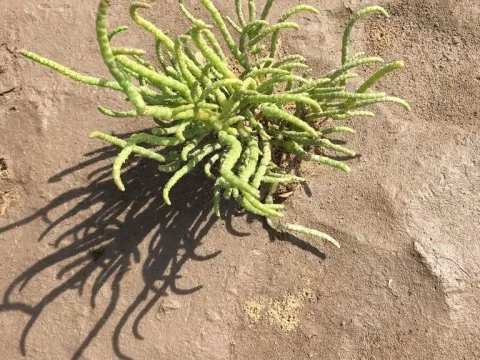
Salicornia emerici
Salicornia emerici
Salicornia emerici is an annual succulent halophyte, meaning its sowing period is strictly dictated by soil temperature. Sowing should ideally take place in spring once the upper soil layer warms up to 12–15 degrees Celsius.
What the section contains
Salicornia emerici
In southern regions, the optimal sowing window falls in April or early May. It is crucial to ensure adequate substrate moisture for successful germination, as the seeds of this plant require contact with water to activate their growth processes.
The sowing method is typically surface-based or involves minimal soil covering, no deeper than 0.5–1 centimeter. Excessive depth significantly reduces germination rates, necessitating the use of specialized seeders designed for small seeds.
To achieve optimal plant density, a seeding rate of 2 to 4 kilograms per hectare is generally sufficient. Utilizing high-quality, professional seed stock with high germination energy helps minimize seeding rates and reduces overall production costs.
Regular irrigation during the germination phase is critical for Salicornia, despite its natural resilience to salinity. As the root system develops, the plant becomes more capable of accessing water from deeper soil horizons.
The primary agronomic advantage of Salicornia emerici is its ability to thrive in soils with extremely high salt concentrations where conventional crops fail. This makes it a promising plant for land reclamation and the productive use of salt flats.
The plant prefers sunny areas with unrestricted light access, as it is a light-loving succulent. Intense sunlight promotes biomass accumulation and optimizes photosynthetic processes within its fleshy, water-storing stems.
Soil requirements are minimal; the crop performs excellently on heavy clay soils with excessive accumulation of sodium and magnesium. However, maintaining a base level of nitrogen nutrition is recommended to maximize green biomass yields.
Climatic conditions should align with arid or semi-arid zones, although Salicornia efficiently utilizes available moisture from groundwater. High air humidity may slow plant growth due to an increased risk of fungal infections.
The temperature range for growth is quite broad, and the plant successfully withstands summer heat. However, the vegetation cycle ends with the first autumn frosts, at which point nutrient accumulation in the seeds ceases.
The yield of Salicornia emerici depends heavily on the degree of soil salinity and the availability of irrigation water during critical growth phases. In commercial farming on saline lands, the crop demonstrates stable productivity.
The plant's biomass serves as a valuable resource, and its seeds contain a significant percentage of oil. With proper agronomic practices, average green biomass yields can reach 10–15 tons per hectare.
The oil content in Salicornia seeds makes it a subject of interest for biofuel and technical oil production. With the right cultivar and optimal planting density, seed yields can range from 500 to 800 kilograms per hectare.
Intensive cultivation using brackish water irrigation can enhance commodity output. Economic efficiency increases when drainage water is repurposed for crop production.
A promising direction is the use of the crop for phytoremediation, where the value lies not just in the harvest, but in the extraction of excess salts from the soil, thereby increasing the land's potential for future crop rotation.
Salicornia emerici possesses notable resistance to many diseases that typically affect conventional cereals and industrial crops. However, excessive moisture and water stagnation can trigger the development of root rot.
The primary pests for young stands are insects that feed on the succulent tissues of these plants. These include various types of aphids and weevils, which can stunt the growth of young seedlings.
Fungal infections, such as powdery mildew, may emerge in conditions of high planting density and poor air circulation. Crop rotation and maintaining optimal stand density are the most effective preventative measures against disease.
Weeds do not pose significant competition to Salicornia in highly saline areas, where most plant species cannot survive. This reduces the need for herbicide application and makes the crop economically attractive.
It is essential to monitor the sanitary state of fields to prevent pest outbreaks during the growing season. Using biological control agents is preferable to chemical means, especially considering the intended use of the biomass for food or feed.
Harvesting is conducted during the phase of full physiological seed maturity or peak nutrient accumulation in the above-ground biomass. The optimal time is when the stems transition in color from green to a yellowish hue.
For green biomass production, harvesting is performed mechanically using specialized harvesters designed for low-growing, succulent crops. It is important to avoid over-drying the cut material to preserve its nutritional qualities.
Seed harvesting requires a careful approach due to the small size of the seeds and their tendency to shatter if left too long in the field. Threshing should be performed at a seed moisture content of around 12–14 percent to prevent storage spoilage.
Post-harvest processing involves cleaning the raw material to remove soil particles and stem debris. Using seed cleaners and grading machines allows for the isolation of high-quality seed material with minimal losses.
Storage of the harvested biomass must take place in dry, ventilated facilities to prevent molding. Due to the specific salt content, the plant's tissues possess inherent antiseptic properties, which facilitates easier storage.