
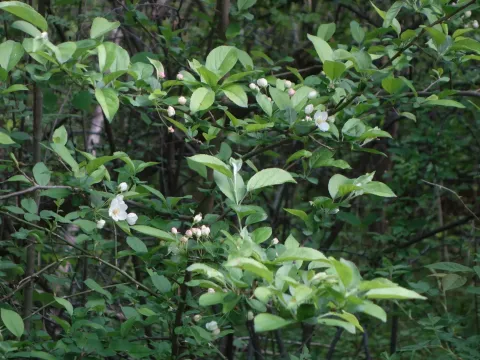
Siebold's crabapple
Malus sieboldii
Siebold's crabapple (Malus sieboldii) is a member of the Rosaceae family. It is a deciduous shrub or small tree that typically reaches a height of 3 to 5 meters, featuring a spreading, elegant crown.
What the section contains
Siebold's crabapple
The species is native to East Asia, primarily found in Japan, Korea, and parts of China. It grows naturally in mountainous regions and forest fringes, showing excellent adaptability to temperate climates.
This tree thrives in fertile, well-drained loamy soils. It prefers a neutral to slightly acidic pH level and requires consistent moisture, although it cannot tolerate waterlogged conditions or heavy, stagnant soils.
For optimal growth and flowering, Siebold's crabapple requires a sunny location. It is quite hardy and capable of withstanding cold winters, making it a popular choice for parks and home gardens in various regions.
Agricultural practices for this species include annual pruning to maintain shape and airflow within the crown. Applying balanced fertilizers in early spring supports healthy growth and enhances the visual appeal of its small fruits.
Like many trees in the Malus genus, Siebold's crabapple is susceptible to common fungal diseases, including apple scab and powdery mildew, which are most prevalent in humid weather conditions.
Pests that may impact the tree include aphids, mites, and leaf-mining insects. Regular monitoring and the application of integrated pest management strategies are recommended to maintain the tree's health and aesthetic value.