
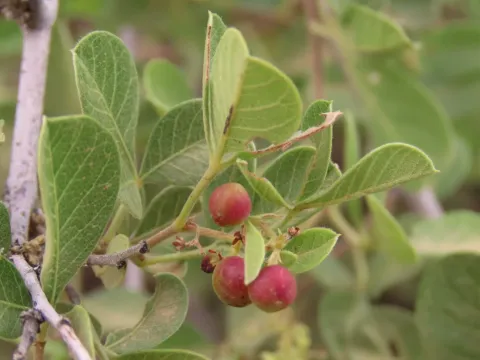
Sicilian Sumac
Rhus vulgaris
Propagation of Rhus coriaria is typically achieved through seeds, which require stratification or mechanical scarification to overcome their hard seed coat.
What the section contains
Sicilian Sumac
Sowing should take place in early spring after the soil warms up or during late autumn, allowing the seeds to undergo natural dormancy through the winter.
Vegetative propagation via root suckers is also commonly practiced, providing a more consistent and faster way to establish new plantations from parent plants.
When planting, rows should be spaced 2.5 to 3 meters apart to allow sufficient light penetration and airflow, which is critical for healthy development.
Proper initial care is essential; young plants should be kept weed-free to prevent competition for water and soil nutrients during the establishment phase.
Sicilian Sumac thrives in sunny, open locations, as it is a highly light-demanding species that requires direct exposure for optimal growth.
The plant is known for its tolerance to poor, rocky, and calcareous soils where many other traditional crops would struggle to survive.
Good drainage is the most vital soil requirement; the species is sensitive to waterlogging, which can cause root rot and rapid decline in plant health.
It displays remarkable drought resistance once established, making it suitable for Mediterranean and semi-arid climates with hot, dry summers.
Maintenance of moderate soil pH, preferably near neutral or slightly alkaline, supports the best development and chemical profile of the plant tissue.
The primary economic value of Rhus coriaria lies in its leaves, which are rich in tannins utilized extensively in the leather tanning industry.
Plantation yield depends on the age of the shrubs and the implementation of systematic pruning, which promotes the growth of high-tannin content foliage.
Mature plantations typically reach peak productivity after five to seven years and can remain productive for several decades if managed correctly.
The timing of harvest is crucial for yield quality; tannin concentration is highest in the leaves immediately prior to or during the flowering season.
Mechanical harvesting techniques can be applied to large-scale operations to increase efficiency and lower the overall production cost of the raw material.
The plant exhibits high resistance to most agricultural pests and diseases, which is attributed to its high concentrations of secondary metabolites.
Excessive humidity or poor air circulation within the plantation can occasionally lead to fungal issues, specifically powdery mildew.
Monitoring for soil-borne larvae is recommended during the early growth stages, as these can occasionally damage the developing root systems.
Good site selection remains the best defense against potential threats, ensuring that environmental conditions do not favor the development of pathogens.
Generally, the need for chemical pesticides is minimal, making Sicilian Sumac a favorable crop for low-input and sustainable farming systems.
Leaves are harvested during the summer months, often coinciding with the flowering period to capture the highest levels of active ingredients.
After harvesting, the leaves must be dried in the shade to prevent the degradation of tannins caused by exposure to ultraviolet radiation.
Sumac fruits are harvested once they are fully ripe and display a deep red color, which is a visual indicator of peak maturity for spice production.
Post-harvest processing involves careful cleaning to remove stems and impurities, followed by drying and milling according to the final use.
Storage should be performed in a cool, dry environment to maintain the shelf life and quality of the processed product, preventing moisture absorption.