
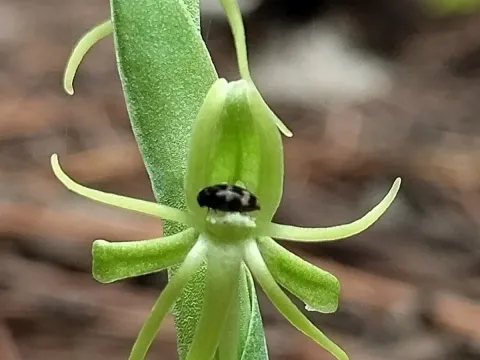
Short-leaf bog orchid
Platanthera brevifolia
The short-leaf bog orchid (Platanthera brevifolia) is a perennial herbaceous plant belonging to the Orchidaceae family. It is a specialized species that thrives in very specific environmental niches.
What the section contains
Short-leaf bog orchid
Its natural range is limited primarily to the mountainous regions of Texas and New Mexico in North America. The plant is found in moist, shaded environments, typically near seepage areas or mountain streams.
The survival of this species depends entirely on a symbiotic relationship with specific soil fungi (mycorrhiza), which provide essential nutrients to the germinating seeds and the adult plant.
These orchids require stable moisture levels and cool, sheltered temperatures. Due to these highly specialized needs, the species is not cultivated as an agricultural crop and is of no commercial interest to the farming industry.
Botanically, it is characterized by its distinct, relatively short leaves and a spike of small, inconspicuous flowers that have evolved to attract specific pollinating insects.
The primary threat to Platanthera brevifolia is the loss of its fragile habitat caused by hydrological changes and commercial development in mountain regions.
The species is highly susceptible to root rots caused by soil pathogens when the natural drainage patterns of its habitat are disturbed by human activity.
Herbivorous insects and various species of slugs represent constant threats, as they can quickly defoliate or consume the reproductive parts of the plant.
Environmental changes, particularly shifts in rainfall patterns and prolonged drought, pose a significant risk to the plant’s reproductive success and population stability.
Given its status as a rare and endangered plant, it is legally protected across much of its historical range to prevent poaching and habitat destruction.