
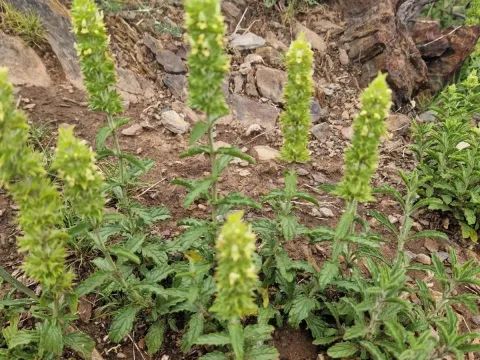
Sideritis ruscinonensis
Sideritis ruscinonensis
Sowing of Sideritis ruscinonensis is recommended during the autumn season or early spring as soon as the soil temperatures reach about 10-12 degrees Celsius.
What the section contains
Sideritis ruscinonensis
The seeds possess a long dormancy period, and stratification techniques can be applied to significantly improve germination rates on the agricultural plot.
Seed depth should be maintained between 0.5 to 1 centimeter, as the small seeds require close contact with moist soil while remaining near the surface for energy efficiency.
For commercial farming, row seeding with a spacing of 45 to 60 centimeters is preferred to allow for mechanical weed control and sufficient airflow between plants.
Consistent stand density is essential to ensure that individual plants have enough space to mature without competing for light or nutrients in the early stages.
Sideritis ruscinonensis is a quintessential xerophyte from the Lamiaceae family, evolved to thrive in harsh Mediterranean climatic conditions and mountainous terrains.
The species requires well-drained, nutrient-poor soil, ideally preferring limestone-based or rocky substrates that facilitate excellent water runoff.
Water stagnation is detrimental to this crop; therefore, site selection must avoid low-lying areas or clay-heavy soils where root rot can occur rapidly.
Full sun exposure is a vital requirement for successful cultivation, as it stimulates the production of essential oils and secondary metabolites that define the herb's quality.
Although the plant is highly drought-tolerant, supplemental irrigation during the peak growth phase can increase total biomass production without compromising quality.
The primary threats to Sideritis plantations are fungal pathogens induced by excessive humidity, such as powdery mildew or various forms of root and crown rot.
Pests typical for the Lamiaceae family, such as leaf beetles and various sucking insects, may periodically infest the crop, requiring careful monitoring.
Crop rotation serves as the most effective preventative measure against soil-borne diseases, with a recommended gap of at least four years before replanting on the same site.
Integrated pest management strategies are encouraged to minimize chemical input, ensuring that the harvested product meets high health and safety standards.
Timely identification of localized infections followed by the removal of affected plant material helps prevent the spread of pathogens across the entire field.
Harvesting should be timed during the peak flowering stage, which represents the period of maximum concentration for medicinal and aromatic components.
The best practice is to collect the herb in the morning hours once dew has evaporated, ensuring that volatile compounds are at their peak before the day's heat.
Plants should be harvested by cutting the stems 5 to 10 centimeters above the soil level, which helps maintain plant vigor and encourages regrowth for future seasons.
Immediately after cutting, the raw material must be dried in a shaded, well-ventilated area or in mechanical dryers at temperatures strictly below 40 degrees.
Proper storage in a dry, dark, and cool environment is necessary to prevent degradation and ensure that the final product maintains its therapeutic properties for the end user.