
Kallstroemia
Kallstroemia
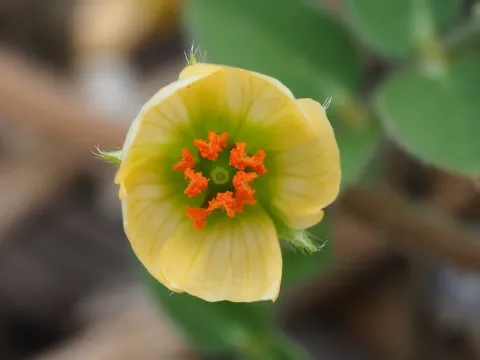
Kallstroemia is a genus of flowering plants in the family Zygophyllaceae, commonly known as caltrops. In an agricultural setting, these plants are considered persistent weeds that can interfere with crop production.
What the section contains


Kallstroemia
The germination of Kallstroemia seeds is triggered by soil warming and adequate moisture levels. These plants are annuals that complete their life cycle rapidly during the warmer months of the year.
Agricultural management begins with pre-emergence control. Shallow cultivation is highly effective at destroying seedlings before they establish deep taproots that anchor them firmly into the soil.
Seed bank management is crucial, as the seeds can remain viable for several years. Reducing the seed load through consistent weeding practices is the only long-term solution for field cleanliness.
The plants grow in a prostrate or semi-erect fashion, quickly covering the ground and competing for space, nutrients, and sunlight against desirable crops in the field.
Kallstroemia thrives in sunny, dry environments with well-drained, sandy soils. They are well-adapted to arid and semi-arid climates, often found in disturbed areas, roadsides, and fields.
The genus is native to tropical and warm temperate regions of the Americas. Its ability to withstand high temperatures and low rainfall makes it a successful competitor in desert or drought-prone farming regions.
Nutrient requirements for Kallstroemia are low, allowing the plant to colonize soils that are otherwise considered poor. It excels in regions where other vegetation struggles due to lack of organic matter or extreme temperatures.
Shade tolerance is very low for this genus. Cultural practices that focus on rapid crop canopy closure are highly successful in suppressing the growth of Kallstroemia in large-scale farming systems.
Soil pH levels do not significantly restrict the growth of these plants, as they are capable of adapting to a wide range of soil chemistry common in agricultural landscapes.
While Kallstroemia is rarely bothered by serious pests that would decimate its population, it can be susceptible to generalist insects and occasional fungal diseases under high humidity conditions.
The primary threat posed by Kallstroemia is its role as a reservoir for viruses or insects that can attack economically important crops, potentially leading to reduced yields and quality.
Chemical control involving selective herbicides is a common practice in modern agriculture. However, timing is essential; applications must occur when the plants are in their early vegetative stage.
- Manual removal before flower development.
- Application of post-emergence herbicides.
- Crop rotation to break the weed life cycle.
- Maintaining soil cover to limit light penetration.
The plant's ability to produce large quantities of seeds makes it an persistent pest. Monitoring field margins and irrigation channels is necessary to prevent re-infestation of clean agricultural areas.