
Kallstroemia maxima
Kallstroemia maxima
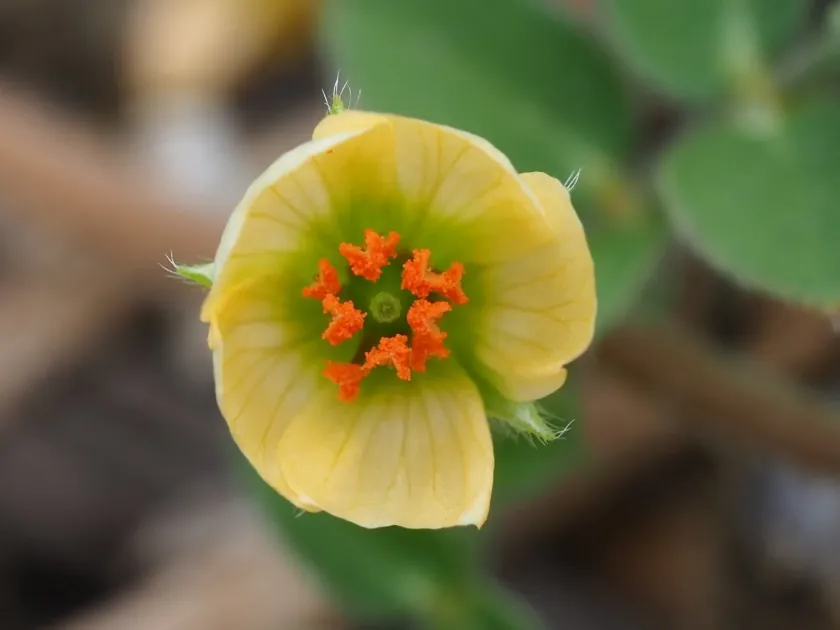
Description
Sowing dates
Kallstroemia maxima is an annual herbaceous plant whose life cycle is closely synchronized with seasonal rainfall patterns in tropical environments. Seeds typically germinate shortly after the first significant rains, initiating a rapid growth phase.
For optimal germination, the soil temperature must consistently remain within the range of 25 to 30 degrees Celsius. In agricultural landscapes, the soil seed bank may remain viable for several years, leading to multiple flushes of seedlings throughout the growing season.
The plant demonstrates a prolific reproductive strategy, producing large quantities of seeds that are easily dispersed by water, wind, or human agricultural activities. This high reproductive output makes it a persistent species in disturbed field environments.
Farmers often manage the emergence of this species by utilizing stale seedbed techniques, where the soil is prepared and then treated to kill early germinants before crop planting. This practice significantly reduces the weed pressure during the early growth stages of the primary crop.
Successive cultivation or herbicide applications are necessary to manage the population, as the plant grows rapidly and can reach its reproductive stage in a relatively short period, often within weeks of germination.
Growing requirements
Belonging to the Zygophyllaceae family, Kallstroemia maxima is highly adapted to open, sun-exposed sites. It thrives in well-drained, sandy or gravelly soils where solar radiation is high and the soil temperature rises quickly.
The plant exhibits remarkable drought tolerance, which allows it to persist on arid or degraded lands where many other plant species fail to establish. Its root system is capable of exploring deep soil horizons for moisture.
Kallstroemia maxima is intolerant of waterlogged conditions. Heavy clay soils with poor drainage are generally unsuitable for this species, as excessive moisture leads to root rot and hinders gas exchange in the soil profile.
Full sun exposure is a critical requirement for the vigorous growth and development of the plant. In shaded environments, the rate of photosynthesis decreases significantly, leading to stunted stems and a reduced reproductive capacity.
As a heat-loving plant, its physiological processes are optimized for high-temperature regimes, typically between 28 and 35 degrees Celsius. Frost is a limiting factor, and the plant's life cycle is strictly defined by the warm season.
Main diseases and pests
Several insect species serve as primary pests, feeding on the foliage, stems, and reproductive structures of the plant. In certain regions, specialized herbivores can cause significant defoliation, though this rarely eliminates the population entirely.
Fungal diseases, including leaf spot pathogens, may become prevalent under conditions of high relative humidity and poor air circulation. While these diseases can weaken the plant, they often appear late in the season when the plant has already produced seeds.
Interspecific competition is the most significant constraint on the expansion of Kallstroemia maxima. Fast-growing grasses and legume species often outcompete it by capturing available light and nutrients during the peak growing season.
Chemical control is the standard approach in large-scale agriculture, utilizing post-emergence herbicides. Early identification and application are essential, as the plant becomes more tolerant to chemical treatments as it matures and develops a woody base.
Mechanical control methods, such as hoeing or shallow tillage, are effective when applied before the onset of flowering. Removing the plant before it sheds seeds is the single most important practice for preventing the build-up of the soil seed bank.