
Guaiacum
Guaiacum
Guaiacum, often referred to as Lignum Vitae, belongs to the Zygophyllaceae family. It is a slow-growing evergreen tree native to the tropical regions of the Caribbean and Central America.
What the section contains


Guaiacum
The crop thrives in well-drained, sandy, or rocky soils. Agricultural success with Guaiacum is highly dependent on effective drainage, as the root system is extremely sensitive to waterlogging, which often leads to rapid decay.
Climate requirements involve high temperatures, ideally between +22 and +30 degrees Celsius. The plant is remarkably drought-tolerant, making it suitable for regions with a distinct dry season that would limit the growth of less resilient species.
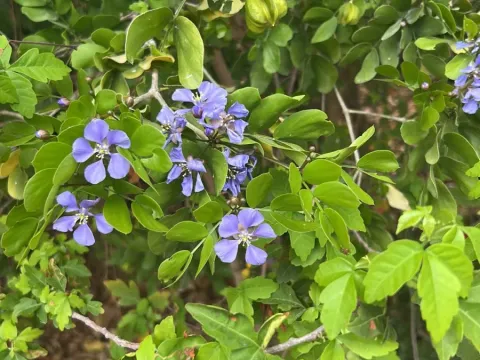
Botanically, the tree is famous for producing one of the densest woods in the world, which is resistant to rot and impact. Its foliage is pinnate, and it features distinct blue or purple flowers that attract various pollinators.
In terms of economic use, the tree is harvested for its heavy, oily wood, traditionally used in shipbuilding and industrial machinery parts. Additionally, the resin is extracted for its therapeutic properties in traditional medicine and perfumery.
The most significant threats to Guaiacum include root rot pathogens, which thrive in poorly drained environments and stagnant water conditions.
While the tree is largely resistant to many pests, young saplings may occasionally suffer from leaf-feeding insects, though these rarely jeopardize the survival of established trees in suitable climates.