
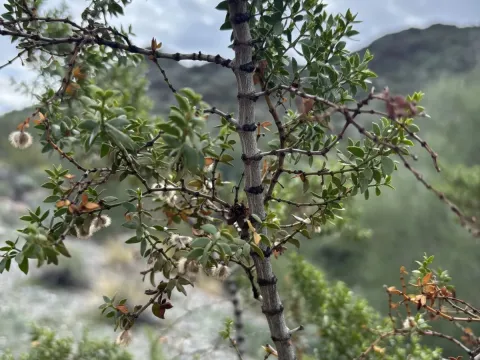
Larrea
Larrea
Larrea is a perennial evergreen shrub, and in its natural habitat, it reproduces primarily through seeds dispersed after the rainy season.
What the section contains


Larrea
Under cultivation conditions, the seeds require stratification to improve germination rates, as they possess a tough coat that inhibits rapid sprouting.
Sowing should be performed in a well-drained substrate with low organic content, mimicking the desert soils where the plant thrives.
The optimal temperature for germination ranges between 20 and 25 degrees Celsius, provided there is sufficient but controlled moisture during the initial stage.
Because seedlings develop quite slowly, transplanting to a permanent location should only be scheduled after a robust root system has been established.
Larrea belongs to the Zygophyllaceae family and is a specialized plant species adapted to the harsh conditions of arid desert environments.
This crop has an extreme requirement for intense sunlight and is highly intolerant of waterlogged soil, which quickly leads to root rot issues.
It prefers nutrient-poor, alkaline, or neutral sandy soils with excellent drainage, ensuring that no moisture accumulates around the root zone.
Successful development of Larrea requires a dry and hot climate, similar to the conditions found in the southwestern United States, Mexico, and arid regions of South America.
Management practices involve minimal irrigation, reserved only for prolonged drought periods, as excessive nitrogen fertilization may negatively affect the concentration of active chemical compounds.
The primary economic value of Larrea lies in the harvest of its leaves and young twigs, which contain high levels of nordihydroguaiaretic acid.
Biomass yield depends significantly on the age of the shrubs and the plantation density, typically resulting in several kilograms of dry raw material per mature plant.
Harvesting is generally performed via mechanical methods during the summer when the concentration of secondary metabolites in the foliage is at its peak.
The main commercial processing path involves extracting compounds for the pharmaceutical and cosmetic industries and producing natural antioxidants.
The productivity of this crop is constrained by its slow growth rate, making the commercial cultivation of Larrea a long-term investment strategy.
Typical plant health issues in Larrea include fungal infections caused by improper moisture regulation and poor water drainage in the soil profile.
Among pests, the greatest threats are specific desert insects that feed on the foliage and occasional infestations of root-knot nematodes.
Effective crop protection is centered on strict adherence to agrotechnical guidelines, focusing on high ventilation and consistent moisture monitoring.
Chemical fungicide treatments are rarely employed, as they can severely compromise the purity and quality of the medicinal raw material produced.
To prevent the spread of pests and diseases, spatial isolation during plantation setup and regular phytosanitary monitoring are highly recommended.