
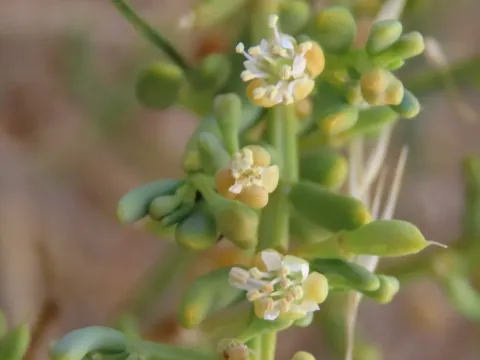
Tetraena
Tetraena
Tetraena is a genus of flowering plants belonging to the Zygophyllaceae family. These plants are typically characterized by their adaptation to arid and semi-arid environments, acting as essential components of desert ecosystems.
What the section contains


Tetraena
The crop is highly regarded for its tolerance to saline and gypsum-rich soils. Unlike traditional agricultural crops, Tetraena thrives in high-salinity conditions, making it an excellent candidate for the remediation of degraded lands in desert climates.
Botanically, these plants possess succulent leaves and a deep-reaching root system. This morphology allows them to maximize water uptake during rare rain events and store moisture to survive prolonged droughts.
Regarding climatic requirements, Tetraena needs high levels of sunlight and sustained warm temperatures for optimal development. It is strictly sensitive to waterlogging, as its roots require excellent drainage and aeration to remain healthy.
Agricultural use of Tetraena focuses primarily on pasture management and desert greening. By planting these species, land managers can stabilize sandy soils and provide a reliable food source for livestock in regions where conventional crops fail.
The biomass yield of Tetraena varies significantly depending on local rainfall patterns and soil mineral composition. In natural rangelands, it provides essential foliage throughout the dry season.
When cultivated in managed plots, controlled irrigation can significantly enhance green matter production. The plant exhibits a high capacity for regrowth after light grazing or controlled harvesting, ensuring sustainable long-term yield.
The nutritional profile of the plant is valued for its mineral density, which supplements the diet of camels and sheep. It serves as a vital survival food when higher-quality forage is unavailable.
Seed production is generally stable, although it requires specific thermal conditions for full maturation. Seed collection techniques have been developed to support the expansion of grazing areas and restoration efforts.
Ongoing research into genetic selection aims to improve both the yield and the palatability of the biomass, potentially positioning Tetraena as a key crop for sustainable desert agriculture.
Tetraena is naturally resistant to many common pests due to its tough, succulent texture and specific chemical composition. This makes it a low-input crop suitable for sustainable farming practices.
However, occasional outbreaks of locusts or other desert insects can cause localized damage to the foliage. Monitoring during the peak growing season is recommended to manage such threats effectively.
Root diseases are primarily associated with poor soil drainage and excessive moisture. To mitigate these risks, it is essential to ensure that planting sites have adequate permeability and minimal risk of seasonal flooding.
Competitive pressure from invasive weed species can occasionally hinder seedling establishment. Maintaining clean plots during the early growth stages is crucial for long-term stand success.
General farm hygiene and the avoidance of chemical over-fertilization are the best strategies to maintain plant health and prevent the development of soil-borne pathogens in the root zone.