
Elatostema umbellatum
Elatostema umbellatum
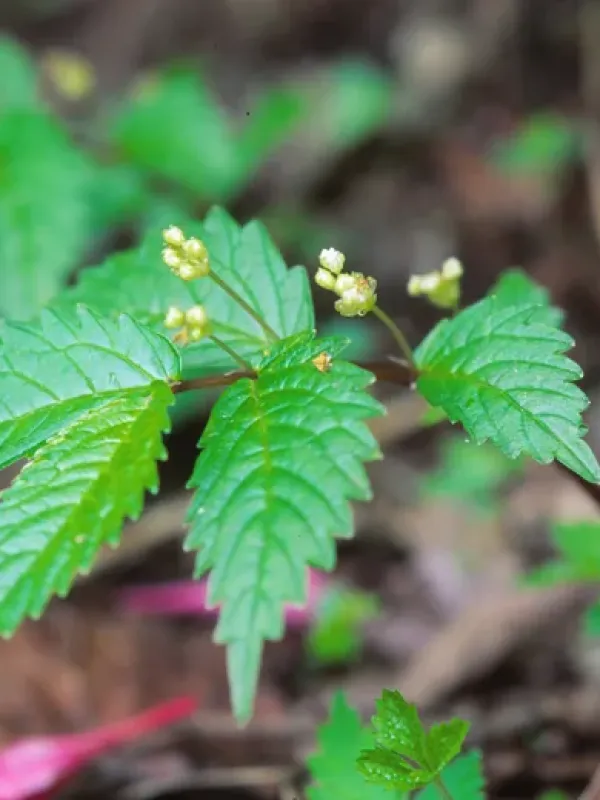
Description
Growing requirements
Elatostema umbellatum is a perennial herbaceous plant belonging to the Urticaceae family. Native to the damp, shaded forests of East Asia, it thrives in environments characterized by high humidity and consistent indirect light, making it a distinctive representative of its botanical genus.
The plant is characterized by its succulent stems and lush foliage, which forms a dense, spreading habit. Botanically, it is perfectly adapted to the forest understory, meaning that its physiological processes are optimized for environments where direct sunlight is filtered through a canopy of larger trees or structures.
Regarding soil requirements, Elatostema umbellatum prefers rich, well-draining, and moisture-retentive substrates. A mixture comprising peat moss, organic compost, and perlite is often ideal to maintain the necessary soil structure and pH levels, typically ranging from slightly acidic to neutral.
Climate control is critical for this species; it requires temperatures consistently between 18°C and 24°C. During the winter, it is recommended to provide a cooling period, ensuring temperatures do not drop below 12°C, which helps the plant rest and prepares it for a vigorous growing season in the spring.
Economically and horticulturally, this plant is primarily utilized in ornamental landscaping, particularly in terrariums, greenhouses, and interior spaces with low light levels. Its ability to create a lush, green carpet makes it a valuable asset for designers seeking to cover soil surfaces in shady displays.
Main diseases and pests
Common threats to Elatostema umbellatum include fungal diseases such as gray mold (Botrytis), which are often exacerbated by poor air circulation and excessive moisture. Pests such as spider mites and mealybugs can also infest the foliage, especially in environments where humidity levels are inconsistent.