
Himalayan giant nettle
Girardinia diversifolia
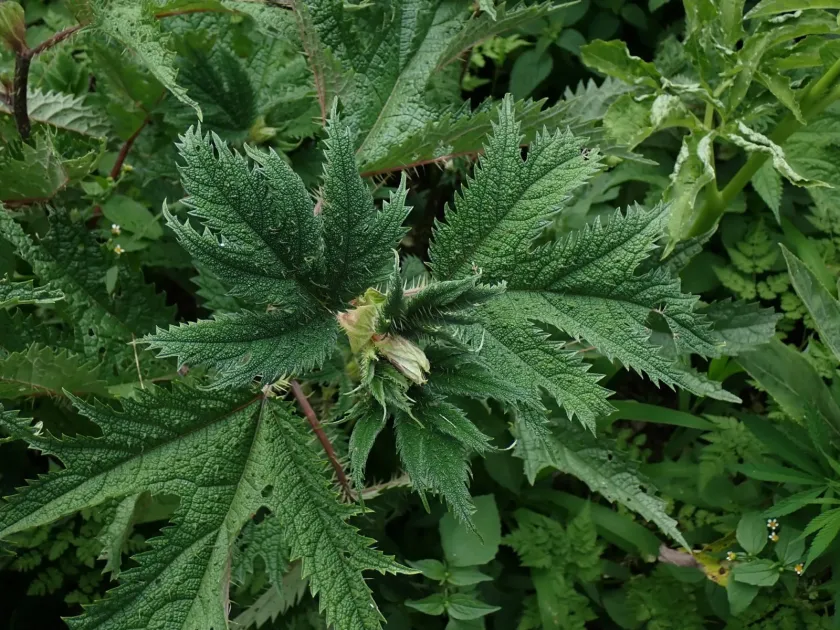
Description
Sowing dates
Girardinia diversifolia, commonly known as the Himalayan giant nettle, belongs to the Urticaceae family and is typically sown in early spring. The timing is crucial to ensure that seeds germinate before the peak heat of the season, often coinciding with the onset of moist conditions in its native highland regions.
Seeds require stratification or pre-soaking in water to break dormancy and increase germination rates. They are sown at a shallow depth of 1–2 centimeters in well-drained, fertile soil to ensure successful seedling emergence.
In commercial cultivation for fiber production, a high seeding density is maintained to encourage tall, unbranched stems. Maintaining row spacing of 30–40 centimeters facilitates weeding and ensures adequate airflow between plants.
The plant exhibits rapid juvenile growth, meaning that early competition from weeds must be mitigated. At temperatures ranging from +20°C to +25°C, healthy seedlings typically appear within two weeks of sowing.
Vegetative propagation using root cuttings is also a common and effective technique, allowing farmers to establish uniform fields more quickly than relying solely on seed germination.
Growing requirements
The crop thrives in semi-shaded to open locations with moist, nutrient-rich soils. It is essential to choose sites with excellent drainage, as waterlogged conditions can lead to rapid decay of the root system.
The ideal climate for Girardinia is humid and temperate, typical of mountainous regions receiving heavy rainfall. While it can withstand mild fluctuations in temperature, severe frost may cause significant damage to the plant's succulent aerial parts.
Soil nutrient management is vital, with a preference for slightly acidic to neutral pH levels (6.0 to 7.5). The application of organic fertilizers during the vegetative stage significantly enhances biomass production.
Protection from strong winds is necessary to prevent physical injury to the brittle stems and leaves. Mulching is highly recommended to maintain soil moisture levels and regulate temperature in the root zone throughout the growing season.
The plant's extensive root structure makes it an excellent choice for soil stabilization on steep slopes, helping to prevent landslides and erosion in its native mountain habitats.
Yield
The primary economic output of Girardinia is its high-quality bast fiber, which is celebrated for its exceptional length, strength, and silk-like texture. Yield per hectare is highly dependent on cultivation density and soil fertility.
The fiber is extracted from the stem through a process of retting and stripping. Because of its unique properties, this fiber is sought after for both high-end textile production and artisanal fabric manufacturing.
Beyond fiber, other parts of the plant offer secondary value. The leaves are edible after processing and serve as a source of nutrients, while the seeds contain oils that can be utilized for both industrial and culinary applications.
As a perennial crop, Girardinia can be harvested for several years from a single planting, providing farmers with a reliable and sustainable source of income without the need for constant soil disturbance.
Advancements in processing technology are currently increasing the potential yield and quality of the finished fiber products, making this plant an increasingly attractive option for sustainable textile industries.
Main diseases and pests
Fungal diseases are the primary threat, especially in environments with stagnant air or excessive moisture. Root rot is a common issue that can decimate a crop if irrigation management is not strictly controlled.
Pests such as aphids and spider mites can attack the plants, particularly during the early stages of development. These pests weaken the plant by sucking sap, which can stunt growth and introduce viral pathogens.
Although the plant's stinging hairs provide natural defense against most herbivores, certain specialized insects have evolved to feed on its foliage. Regular scouting of fields is necessary to detect and manage these localized outbreaks.
Biological pest control methods and strict adherence to crop rotation cycles are recommended to maintain plant health. These natural approaches are consistent with the organic standards often associated with this crop.
The plant is generally robust, but poor soil drainage and lack of sunlight are the two biggest environmental stressors that can leave the crop vulnerable to opportunistic pathogens.
Harvesting
Harvesting usually occurs at the stage of peak physiological maturity, which is typically just before or at the beginning of the flowering period. At this stage, the stems contain the highest concentration of fiber.
Due to the stinging hairs, protective gear including gloves and long sleeves is strictly required during harvesting. The stems are cut close to the base using sharp tools to facilitate regrowth or clean field clearance.
Post-harvest, the leaves are stripped, and the stems are bundled for drying. Drying is conducted in shaded, well-ventilated areas to ensure the fiber remains supple and does not lose its structural integrity.
The extraction process involves soaking the stems in water to loosen the fibers from the woody core. This step requires precise timing; over-retting can significantly reduce the strength of the final fiber.
After the fibers are extracted, they are washed, dried, and combed to prepare them for spinning. The final product is a durable, fine-quality fiber that is highly valued in both traditional and modern textile markets.