
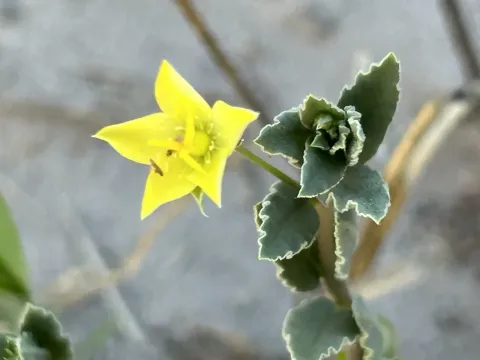
Talinum crispatulum
Talinum crispatulum
Sowing of Talinum crispatulum seeds is best performed during early spring when soil temperatures consistently remain above 18 degrees Celsius.
What the section contains
Talinum crispatulum
The seeds possess high germination rates but should be sown near the surface, as minimal light penetration can benefit the emergence process.
In professional settings, tray-based nursery production is preferred to ensure optimal root development before transplanting into permanent locations.
Care must be taken to ensure the substrate remains moist but not saturated during the initial germination phase of the culture.
Seedling hardening must be carried out progressively to acclimatize young plants to higher sunlight levels and outdoor conditions.
Talinum crispatulum, belonging to the Talinaceae family, is a succulent species that thrives in well-lit environments with full exposure to sunlight.
The culture requires well-draining, sandy-loam soils to prevent moisture accumulation, which can compromise the integrity of the root system.
It displays remarkable drought tolerance, making it suitable for regions with limited rainfall or areas where irrigation resources are constrained.
Optimal growth temperatures for the plant range from 22 to 28 degrees Celsius, though it exhibits high tolerance to heat fluctuations.
Maintenance involves minimal fertilization, usually focusing on potash-rich supplements to strengthen the plant's structural tissues.
Root rot is the most significant threat, often exacerbated by heavy soils, excessive irrigation, or poor drainage systems in the field.
Mealybugs are known to colonize leaf axils, particularly in environments with limited airflow and moderate humidity levels.
Fungal infections, such as those caused by soil-borne pathogens, can cause stem collapse if the soil pH is not properly monitored.
Aphid infestations may occur during the flowering cycle, necessitating the use of targeted botanical or mild synthetic insecticides.
Prevention relies on strict sanitary practices, such as sterilizing soil media and avoiding overhead watering during evening hours.