
Buenos Aires tobacco
Nicotiana bonariensis
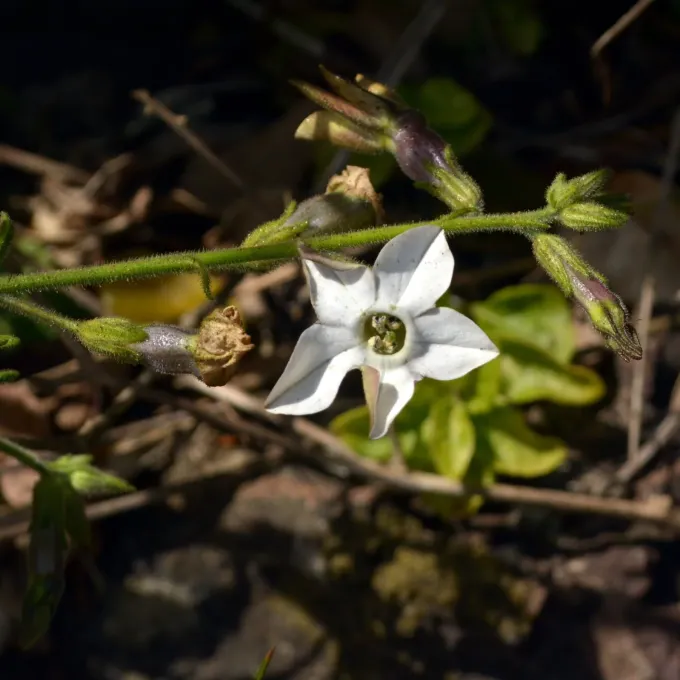
Description
Sowing dates
Buenos Aires tobacco (Nicotiana bonariensis) is a heat-loving plant, and in temperate climates, seeds are primarily sown indoors in late March or early April. It is crucial to use a high-quality, neutral-pH substrate, covering the seeds with no more than 0.5 cm of soil.
The seeds are light-dependent for germination, so they should not be buried deeply. An optimal temperature range for seedling emergence is between 20–22 degrees Celsius, while maintaining consistent surface moisture is key to success.
Seedling transplanting into individual containers is performed at the stage of the first true leaves. This promotes the development of a robust root system, which is essential for ensuring successful establishment when moving plants to their permanent location.
Outplanting into the open field should only occur once the risk of spring frost has passed. Generally, this corresponds to late May or early June, once the soil has reached an adequate temperature for plant growth.
The recommended planting pattern involves maintaining a spacing of 30–40 cm between plants. This distance is vital for ensuring proper air circulation, which significantly reduces the incidence of fungal pathogens in dense stands.
Growing requirements
Nicotiana bonariensis belongs to the Solanaceae family and is highly demanding regarding solar radiation. For optimal flowering and biomass production, the planting site must be situated in a fully sun-exposed area.
Preferred soil conditions include well-drained, fertile loams or chernozems rich in organic matter. The species is highly sensitive to waterlogging, necessitating the installation of proper drainage systems in heavier clay-based soils.
The climatic requirements of this species reflect its South American origin, favoring a moderately humid and warm environment. Being an annual in temperate zones, the plant has no tolerance for freezing temperatures.
During the active vegetation period, Buenos Aires tobacco requires regular moisture, especially during dry spells. However, an unbalanced irrigation regime that keeps the soil excessively wet can lead to root system decay.
Nutrient management is essential for maintaining plant vigor. Applying balanced mineral fertilizers during the early growth stage is beneficial, while moving to phosphorus-potassium-heavy feeds prior to budding helps enhance overall quality.
Main diseases and pests
The primary threats to this crop include fungal infections such as downy mildew and powdery mildew, which thrive in conditions of high humidity and poor ventilation. Systemic fungicides are effective when applied at the onset of symptoms.
Pests such as aphids and thrips can cause significant damage to young leaves and inflorescences. Regular scouting of the leaf undersides is recommended to detect and manage pest colonies at an early stage.
The tobacco thrips is particularly concerning as a vector for viral diseases, which currently lack effective chemical control. Early removal of suspected plants is necessary to prevent widespread infection across the crop.
Root rot, frequently induced by over-irrigation, is a common issue. Following crop rotation principles and avoiding planting on plots previously occupied by other solanaceous crops helps mitigate these soil-borne risks.
Integrated pest management strategies are encouraged during the flowering phase to protect pollinators. Utilizing biological controls rather than broad-spectrum insecticides helps maintain the health of the entire local ecosystem.