
Calibrachoa excellens
Calibrachoa excellens (R. E. Fr.) Wijsman
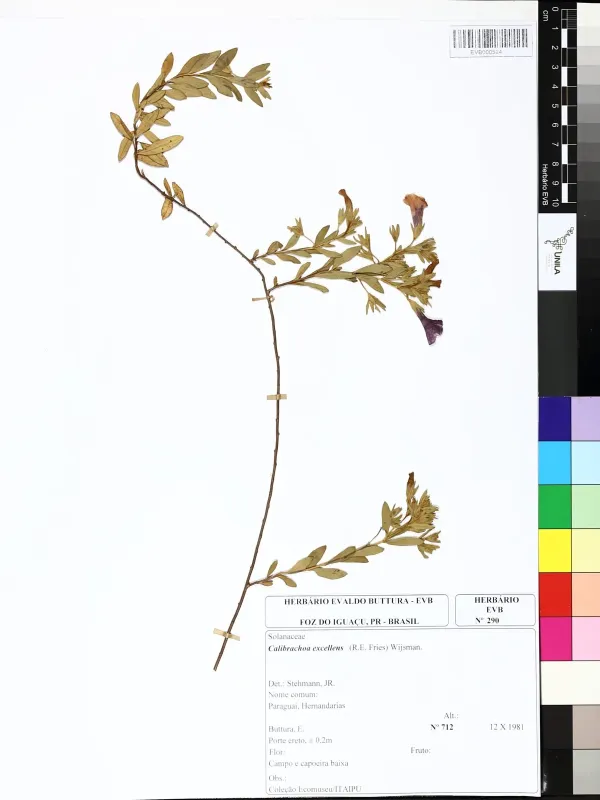
Description
Growing requirements
Calibrachoa excellens is a decorative perennial plant belonging to the Solanaceae family. It is widely recognized for its vibrant, funnel-shaped flowers and trailing growth habit, which makes it a staple in contemporary floriculture.
Originating from the diverse landscapes of South America, this species thrives in environments characterized by bright light and temperate conditions. Its botanical structure is adapted to hanging baskets and container gardens where its cascading stems can develop fully.
The plant requires well-drained, porous soil that is slightly acidic to thrive. Nutrient availability is crucial for maintaining the plant's health and continuous blooming cycles throughout the growing season.
Climate requirements include exposure to direct or partial sunlight for several hours a day. Extreme heat can stress the plant, while cold temperatures can be fatal, necessitating careful climate management in non-native latitudes.
Proper cultivation techniques involve regular fertilization with balanced NPK nutrients supplemented with iron to prevent chlorosis, alongside a consistent irrigation schedule that prevents moisture stress.
Main diseases and pests
The primary threats to Calibrachoa excellens are fungal pathogens, specifically those that target the root system in poorly drained or waterlogged container media, such as Phytophthora and Pythium.
Foliar diseases like powdery mildew can also occur in high-humidity conditions where airflow is restricted. Proper spacing and ventilation are essential strategies for mitigating these risks.
Common insect pests include whiteflies, thrips, and spider mites, which can cause significant aesthetic and physiological damage by feeding on cell sap and transmitting viral diseases.
Effective management involves early detection through regular monitoring and the judicious application of biological or synthetic pesticides when infestation thresholds are exceeded.
- Sanitation of growing containers.
- Monitoring of humidity levels.
- Use of disease-free propagation material.