
Calibrachoa missionica
Calibrachoa missionica Stehmann & Semir
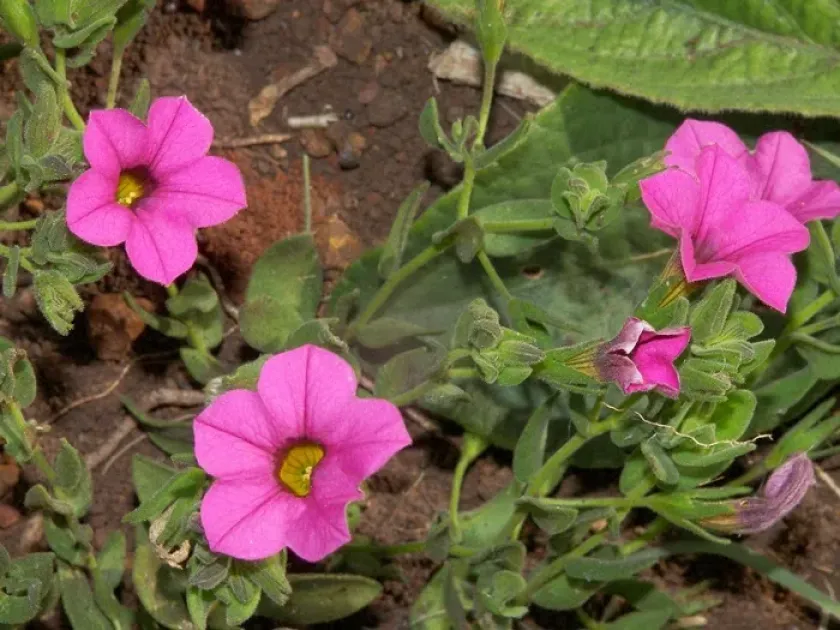
Description
Growing requirements
Calibrachoa missionica is a perennial herbaceous plant belonging to the Solanaceae family. Native to South America, specifically parts of Brazil, this species is highly valued by botanists and specialized collectors for its unique morphological traits within the genus.
The plant grows as a small subshrub with woody basal stems and numerous lateral branches. Its foliage consists of small, glandular-hairy leaves that serve as an adaptation to its native habitat, helping the plant manage transpiration under high light intensity.
Regarding cultivation requirements, it thrives in well-draining, lightweight, and aerated substrates. High humidity around the roots is detrimental, as the species is highly susceptible to root system rot if the soil remains waterlogged for extended periods.
Temperature management is crucial; Calibrachoa missionica prefers moderate climates with daytime temperatures ranging from 18°C to 25°C. It is not frost-tolerant and requires protection during colder seasons if grown in temperate geographic zones.
In terms of хозяйственное usage, it is primarily used as an ornamental species. It is well-suited for container gardening and can be a significant addition to greenhouse collections, provided that specific horticultural protocols are strictly followed.
Main diseases and pests
Root rot, primarily caused by Pythium and Phytophthora species, represents the most significant threat to the health of this plant, often resulting from poor irrigation management.
Spider mites are common pests that thrive in the dry conditions often found in indoor environments or greenhouses, leading to stippling of the leaves and eventual plant decline.
Aphids pose a constant challenge, as they congregate on terminal buds and young growth, causing significant nutrient loss and potential transmission of plant viruses.
Powdery mildew can emerge in environments with high humidity and poor air circulation, manifesting as a white fungal coating on the surface of the leaves and stems.
Effective management includes maintaining clean growing conditions, ensuring proper spacing between plants to maximize airflow, and utilizing integrated pest management (IPM) strategies to minimize chemical usage.