
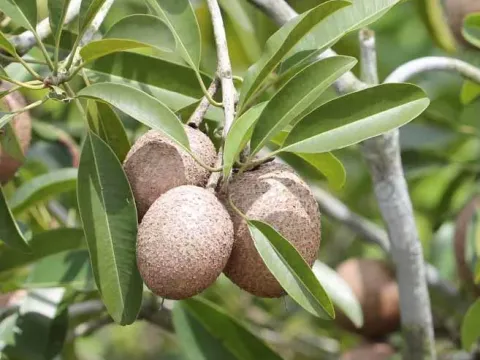
Manilkara
Manilkara
Planting Manilkara is typically done using seeds, which lose their viability quickly and should be sown immediately after extraction from the fruit. In tropical climates, the beginning of the rainy season is considered the optimal time for planting to ensure adequate moisture for root establishment.
What the section contains


Manilkara
For commercial production, vegetative propagation such as grafting or budding on related rootstocks is preferred. This method not only preserves the genetic traits of the parent plant but also significantly shortens the time required for the tree to reach its initial fruiting stage.
Young seedlings require mandatory shading during their early stages, as intense direct sunlight can scorch their delicate foliage. As the plants mature, they are gradually acclimatized to full sunlight, which becomes essential for their metabolic activities and growth.
When planting in an orchard, maintaining a spacing of 8 to 10 meters between trees is crucial. This distance ensures proper air circulation and optimal light penetration into the canopy, which are vital factors in preventing fungal diseases in high-humidity environments.
Soil preparation involves incorporating organic matter such as compost to enhance the substrate structure. Manilkara thrives in well-drained, fertile soils that have sufficient water-retention capacity without being prone to waterlogging.
Manilkara belongs to the Sapotaceae family and is an evergreen tree capable of reaching significant dimensions in its native habitat. The plant is highly sensitive to temperature and cannot survive frost, which restricts its cultivation primarily to the tropical zone.
Stable growth requires average annual temperatures between 22 and 30 degrees Celsius. While the plant prefers well-distributed rainfall throughout the year, mature specimens exhibit moderate resilience to short dry spells.
The tree adapts well to various soil types, including limestone and sandy soils, provided there is efficient drainage. A neutral to slightly acidic soil pH is ideal for the efficient uptake of essential nutrients by the root system.
In commercial plantations, Manilkara responds positively to balanced mineral fertilizers containing nitrogen, phosphorus, and potassium. Regular fertilization during the active growing season promotes vigorous flowering and improved fruit development.
Being a light-demanding crop, Manilkara must be established in open areas without competition for sunlight from neighboring trees. Insufficient light exposure leads to stunted growth, sparse foliage, and a notable decrease in total fruit production.
The yield of Manilkara depends on the tree's age, maintenance practices, and specific climatic conditions of the season. A healthy, mature tree can produce several hundred kilograms of fruit annually under optimal conditions.
Fruiting typically begins several years after planting, with productivity increasing gradually over time. Well-pruned, older trees can maintain high output levels for many decades, making this crop a long-term economic investment.
Yield regulation is achieved through careful canopy pruning. Removing dead, diseased, or overcrowded branches allows the tree to allocate resources toward larger, higher-quality fruit and facilitates easier access during harvesting.
Harvesting is labor-intensive as fruits do not always ripen simultaneously. Monitoring individual trees for maturity is necessary to prevent spoilage or physical damage to the fruit during picking.
Beyond edible fruit, Manilkara is historically significant for its latex, known as chicle, which was traditionally used in the chewing gum industry. This dual-use potential adds value to the cultivation of these trees.
The primary pests affecting Manilkara are scale insects and mealybugs, which colonize the underside of leaves and tender stems. They feed on plant sap, weakening the tree, causing leaf distortion, and increasing susceptibility to secondary infections.
Fruit flies are a significant threat, as they lay eggs within the developing ovaries or ripening fruits. Infested fruits rot rapidly, necessitating preventive spraying or the use of fruit bagging techniques during the fruiting phase.
Fungal diseases, including anthracnose and various rots, pose risks during prolonged rainy periods. High ambient humidity promotes spore dispersal, leading to leaf spotting and necrotic lesions on the woody parts of the plant.
An integrated approach is used to mitigate these threats, including sanitary pruning to improve airflow and the prompt removal of infected debris. Biological control agents or authorized chemical treatments may be applied if infestation levels become severe.
Maintaining high agricultural standards is the best defense against pests and diseases. A vigorous, well-nourished tree possesses natural defensive mechanisms that significantly reduce the likelihood of large-scale outbreaks.
Harvesting Manilkara fruits is performed exclusively by hand due to their vulnerability to impact damage. Ripeness is gauged by changes in skin color and the characteristic softening of the fruit under gentle pressure.
Post-harvest handling requires careful sorting and transport to minimize bruising. Given the fruit's relatively short shelf life in its fresh state, prompt distribution or immediate industrial processing is recommended.
In some cases, fruits are harvested slightly unripe if they are intended for long-distance export. During the subsequent ripening process, they develop optimal taste and texture for the consumer.
The wood of Manilkara, harvested when old trees are replaced, is highly valued as a luxury timber. It is characterized by exceptional density, strength, and rot resistance, making it suitable for high-end construction and furniture making.
In conclusion, the harvest process is a multifaceted operation that involves collecting fresh fruit and maximizing the value of timber resources, highlighting the versatility of this tropical crop.