
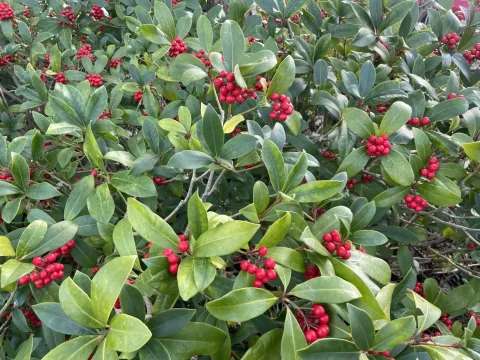
Skimmia
Skimmia
Skimmia (lat. Skimmia) is an evergreen ornamental shrub belonging to the Rutaceae family. It is native to the temperate forests of East Asia, including regions in Japan, China, and the Himalayas, where it thrives in shaded and humid environments.
What the section contains


Skimmia
The shrub is known for its slow growth, leathery deep green leaves, and fragrant flowers. Being a dioecious plant, Skimmia requires both male and female plants to be planted in proximity to ensure fertilization and the subsequent production of ornamental red berries.
The cultural requirements for Skimmia include moist, acidic, and well-drained soil rich in organic matter. They are highly susceptible to root damage caused by waterlogged soils, making proper drainage a crucial aspect of successful planting and container gardening.
Skimmia plants perform best in partial shade or full shade conditions. Excessive sunlight can damage the leaves, causing bleaching or scorching. In temperate climates, they need protection from cold, drying winds that can affect the plant's health during the winter months.
Economically, Skimmia is primarily valued as an ornamental plant used in landscaping, rock gardens, and winter displays. Its aesthetic appeal during the dormant season, driven by clusters of buds and persistent bright berries, makes it a popular choice for garden design.
Common pests that affect Skimmia include spider mites and scale insects. These pests often thrive in environments with low humidity or poor ventilation, leading to leaf drop and general weakening of the plant if not addressed promptly.
Root rot is the most serious threat, typically resulting from over-irrigation or inadequate soil drainage. Fungal pathogens exploit wet conditions to infect the root system, which can rapidly lead to the wilting and eventual death of the entire specimen.
Chlorosis is a frequent issue if the soil pH becomes too alkaline, preventing the plant from absorbing essential nutrients like iron. Maintaining soil acidity (between 5.0 and 6.0) is vital for ensuring the plant’s foliage remains vibrant and healthy.
Management of pest populations involves the application of appropriate systemic insecticides and maintaining good hygiene around the planting site. Regularly washing the foliage can also help mitigate the risk of mite infestations in indoor or greenhouse settings.
Disease prevention is anchored in correct site selection and careful water management. By ensuring the soil provides the necessary acidity and drainage, growers can keep Skimmia plants resilient against most common horticultural threats and pathogens.