
Laurel-leaved Skimmia
Skimmia laureola
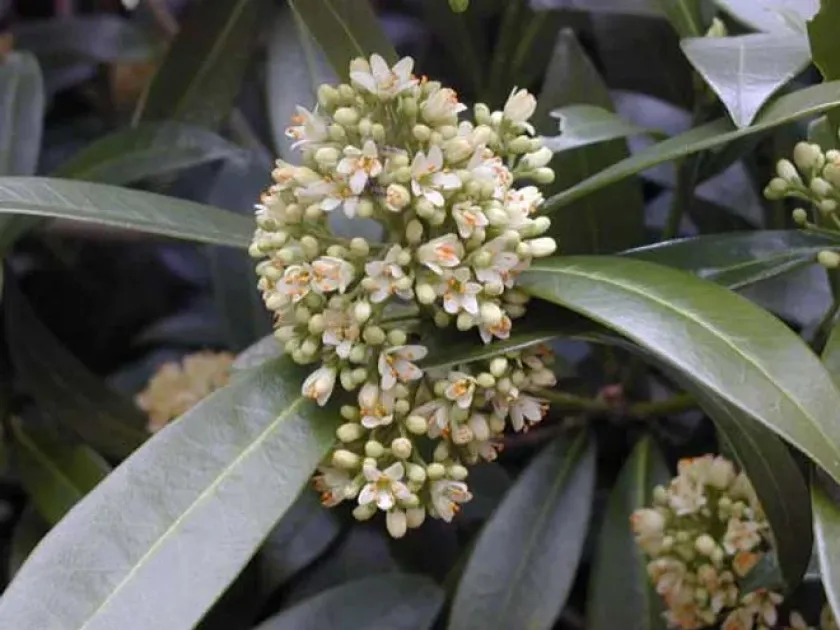
Description
Growing requirements
Skimmia laureola, commonly known as the Laurel-leaved Skimmia, is an ornamental evergreen shrub belonging to the Rutaceae family. Native to the Himalayan region, it is valued for its glossy foliage and aromatic characteristics, making it a staple in woodland-style garden landscapes.
This species thrives in partial shade or dappled light, as intense sunlight can scorch its sensitive leaves. It prefers cool, moist conditions similar to its native mountain habitat and does not tolerate high heat or prolonged periods of direct sun exposure during the mid-day.
The ideal soil for cultivation is acidic, well-draining, and rich in organic matter. Gardeners should avoid planting Skimmia in heavy clay or waterlogged soils, as the root system is highly susceptible to rot. Adding organic mulch, such as leaf mold or pine needles, helps maintain acidity and soil moisture.
Climate requirements include protection from cold, drying winds. While the plant is moderately hardy, it is best suited for sheltered sites or containers that can be moved to cooler, frost-free environments in harsh winter climates. Maintaining consistent soil moisture is crucial for its overall health.
General maintenance involves light pruning to preserve shape and regular fertilization with acid-loving plant food during the spring growth phase. It is essential to ensure that water pH remains slightly acidic to prevent nutrient deficiencies, particularly iron chlorosis.
Main diseases and pests
Spider mites are the most common pests that affect Skimmia laureola, especially in dry and warm indoor conditions or during summer droughts. Their presence is indicated by fine webbing and yellow stippling on the leaves, which can lead to premature leaf drop.
Scale insects can also infest the stems and undersides of leaves, weakening the shrub by extracting vital sap. Regular inspection and the use of horticultural oils or systemic insecticides are recommended strategies to manage these pests effectively.
Fungal diseases, such as leaf spot and various forms of root rot, are primarily caused by poor drainage and excessive irrigation. If the plant shows signs of wilting or darkening stems, immediate action to improve soil aeration and reduce watering is necessary.
Prevention remains the best strategy; this involves avoiding overhead watering to keep foliage dry and ensuring adequate spacing between plants to allow for airflow. Removing and destroying any infected plant material helps prevent the spread of fungal spores.
When performing any maintenance or pruning, ensure that all equipment is sterilized with alcohol. This simple practice significantly reduces the risk of transferring pathogens from one specimen to another within the garden or nursery.