
Skimmia confusa
Skimmia confusa
Description
Growing requirements
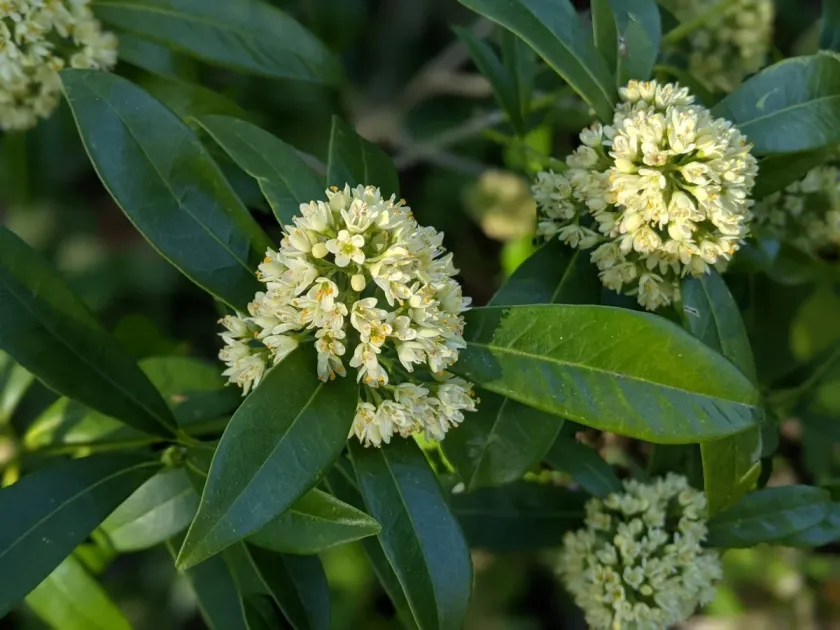
Skimmia confusa is an evergreen ornamental shrub belonging to the Rutaceae family. Native to the woodlands of East Asia, particularly Japan, this species is highly valued for its dense foliage and attractive, fragrant floral displays.
This species thrives in partial to full shade. Direct sunlight, especially during the peak of summer, can scorch its leathery leaves. Therefore, it is ideal for woodland gardens or protected areas within a landscape design.
The shrub requires moist, well-draining, and acidic soil. It is essential to ensure the planting site is rich in organic matter, such as peat or leaf mold, which mimics its natural forest floor habitat and promotes healthy root development.
Regular watering is crucial, especially during dry spells. However, Skimmia confusa is sensitive to waterlogged conditions. Using a high-quality drainage system is necessary to prevent root rot, particularly in container-grown specimens.
Due to its slow growth habit, minimal maintenance is required. Annual mulching with organic compost helps retain soil moisture and suppresses weeds, providing the plant with long-term nutrients for sustained growth.
Main diseases and pests
Spider mites are common pests that thrive in dry conditions. They are typically found on the underside of leaves, and their presence is indicated by fine webbing and stippling on the foliage surface.
Scale insects can infest stems and branches, causing significant stress to the plant. Manual removal or the application of horticultural oils is effective for managing these pests before they spread extensively.
Root rot is a major threat caused by overwatering or poorly drained soil. Symptoms include wilting leaves and dark, mushy roots, which often necessitate immediate drainage correction and fungicide treatment.
Powdery mildew may occur if air circulation is poor, especially in humid conditions. Keeping the crown of the shrub well-ventilated and avoiding overhead watering helps prevent fungal development on the leaves.
Regular monitoring for early signs of distress is the best defense. Implementing integrated pest management strategies ensures the plant remains healthy and resistant to common garden pathogens throughout the season.