
Creeping Skimmia
Skimmia repens
Description
Growing requirements
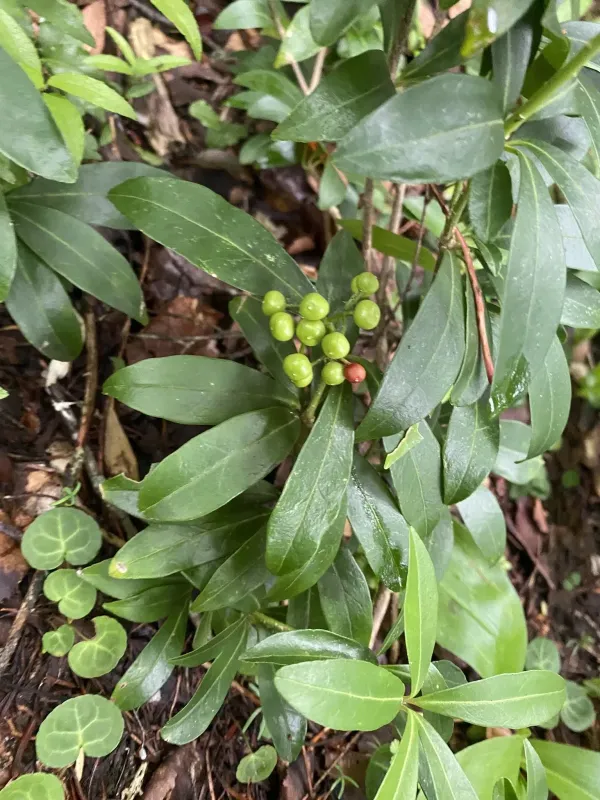
Creeping Skimmia (Skimmia repens) belongs to the Rutaceae family. It is an evergreen creeping shrub, noted for its compact growth habit and year-round ornamental appeal.
This species is native to regions of East Asia, including Japan and Sakhalin, where it thrives in the understory of coniferous and broad-leaved forests under high humidity.
The plant prefers partial shade or fully shaded areas with protection from direct sunlight. Excessive sun exposure can lead to yellowing and burning of the leathery leaves.
Soil requirements include a fertile, loose, and well-drained substrate with an acidic or slightly acidic reaction (pH 5.0–6.5).
The crop is highly sensitive to waterlogging, so ensuring a high-quality drainage layer during planting is essential to prevent root system decay.
Main diseases and pests
The main pests affecting Skimmia are spider mites and scale insects, which proliferate in conditions of low air humidity or during dry weather periods.
To manage insect populations, it is recommended to conduct regular leaf inspections and apply specialized systemic insecticides or acaricides as needed.
Fungal diseases, such as root rot, typically develop due to overwatering or improper irrigation management during the autumn and winter months.
Disease prevention relies on monitoring soil acidity, using fungicides when necessary, and maintaining a moderate irrigation schedule without water stagnation.
It is also important to ensure that dust does not accumulate on the foliage, as this slows down photosynthetic processes and weakens the plant's natural immune system.