
Skimmia foremannii
Skimmia foremannii
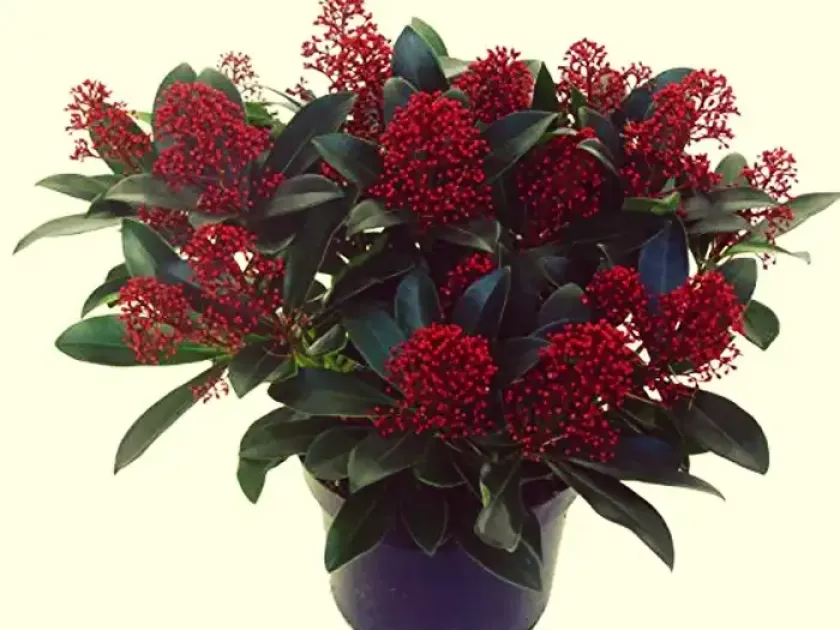
Description
Growing requirements
Skimmia foremannii is a prominent ornamental evergreen shrub belonging to the Rutaceae family. It is widely recognized for its dense foliage and vibrant clusters of berries, making it a highly desirable choice for garden landscapes and winter decor.
The plant thrives in partial shade environments, as it is naturally sensitive to harsh, direct sunlight. Providing a sheltered location that protects the shrub from strong, desiccating winds is essential for maintaining the health of its dark green leaves.
Regarding soil requirements, Skimmia foremannii demands well-draining, slightly acidic soil that is rich in organic matter. A soil mix containing peat or leaf mold is highly recommended to provide the nutrients and pH balance the plant needs.
Water management is critical; the plant requires consistent moisture but cannot tolerate waterlogged conditions. Proper drainage is mandatory to prevent root rot and ensure healthy development throughout the growing season.
In terms of agricultural and landscape utility, this shrub is utilized in border plantings, containers, and shaded garden beds. Its ability to remain decorative during winter months adds significant value to residential and public garden designs.
Main diseases and pests
Spider mites are the most common pests encountered with Skimmia foremannii, especially in environments where humidity levels fluctuate. Regular inspection of the underside of leaves is recommended for early detection.
Scale insects can also infest the shrub, drawing sap from the stems and weakening the plant structure. Integrated pest management using horticultural oils or soaps is effective in keeping these populations under control.
Leaf spot diseases, caused by various fungal pathogens, may occur if the foliage remains wet for extended periods in stagnant air. Ensuring proper plant spacing is key to preventing the spread of these infections.
Root rot is primarily triggered by overwatering and compacted, heavy soils. This condition can be fatal, making the choice of an airy, loose planting substrate one of the most important preventative measures.
Chlorosis, which presents as yellowing leaves, is often a sign of nutrient deficiency or incorrect soil pH. By maintaining an acidic environment and providing balanced fertilizers, growers can prevent these physiological disorders effectively.