
Mussaendopsis beccariana
Mussaendopsis beccariana
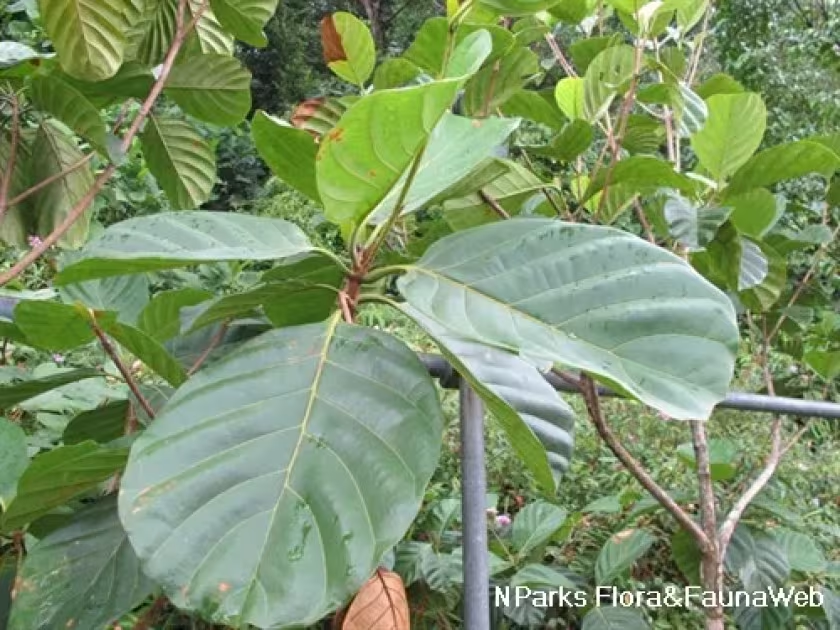
Description
Growing requirements
Mussaendopsis beccariana is a notable tropical tree species belonging to the Rubiaceae family. It is an indigenous plant species found in the dense rainforests of Southeast Asia, specifically across the islands of Borneo and Sumatra.
The plant thrives in equatorial climates characterized by high annual precipitation and consistent temperatures. It typically occupies lowland tropical forests, often inhabiting areas with alluvial soils or peat-rich substrates where water availability is abundant.
Botanically, the species is defined by its robust woody structure and leaves that follow the typical decussate arrangement found in the Rubiaceae family. The plant is biologically adapted to survive in competitive forest environments, reaching significant heights to secure sunlight.
Regarding agrotechnical requirements, the cultivation of this species focuses on maintaining moisture levels in the root zone and ensuring protection against pathogens common in tropical monocultures. It is regarded as a valuable resource for high-quality wood production.
The economic utility of the species is primarily centered on its timber. Ongoing research aims to optimize propagation techniques to support reforestation efforts and provide a renewable source of wood for local construction and woodworking industries.