
Mussaenda pubescens
Mussaenda pubescens
Description
Growing requirements
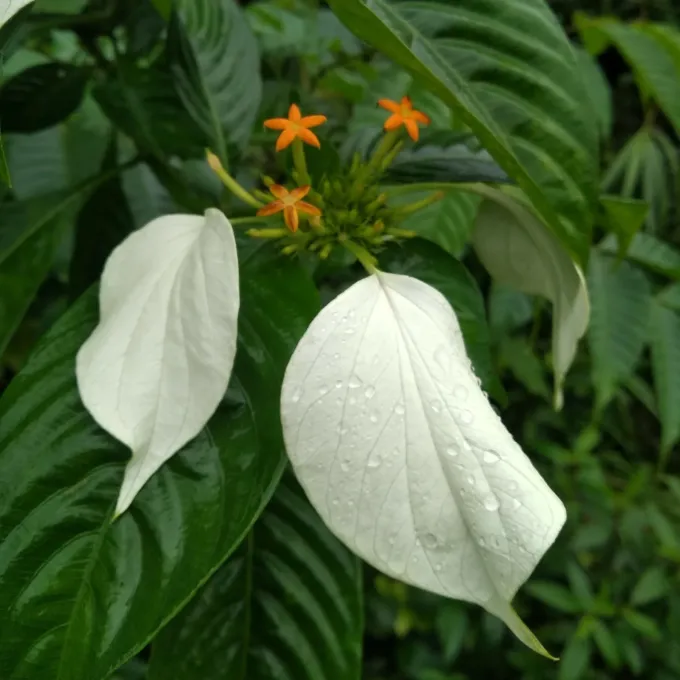
Mussaenda pubescens is a distinct species of tropical shrub belonging to the Rubiaceae family. Native to China and parts of Southeast Asia, this plant is highly valued in ornamental horticulture for its unique calyx lobes that create a vibrant display around the small true flowers.
The culture thrives in tropical environments, requiring warm temperatures consistently between 18 and 28 degrees Celsius. Exposure to temperatures below 10 degrees Celsius can cause significant damage to the plant, leading to leaf drop and stunted growth.
High relative humidity is essential for the healthy development of this shrub. In dry climates, the use of automated misting systems or localized humidifiers is highly recommended to mimic its natural, moist habitat.
Regarding soil, Mussaenda pubescens requires a well-draining, slightly acidic medium rich in organic matter. A mixture of peat moss, pine bark, and coarse sand provides the necessary aeration and moisture retention that the roots demand.
During the growing season, the plant requires regular fertilization to support its prolific blooming. Slow-release balanced fertilizers are preferred to ensure a steady supply of nutrients without causing osmotic stress to the root system.
Main diseases and pests
Spider mites are the most common pest problem for this species, especially in environments where humidity is not properly controlled. Infestations can spread rapidly, so proactive scouting and early treatment with horticultural oils are advised.
Mealybugs can also infest the underside of leaves and stems, sucking the sap and weakening the plant. Physical removal combined with systemic insecticides is the standard approach for managing these stubborn pests.
Fungal pathogens such as leaf spot and root rot represent significant risks in high-humidity cultivation systems. Proper irrigation scheduling, emphasizing surface drying between waterings, is the most effective way to prevent these diseases.
Mineral imbalances, particularly iron deficiency, frequently cause interveinal chlorosis in Mussaenda. Maintaining the correct pH levels (around 5.5 to 6.5) is critical to ensuring iron availability and preventing foliage yellowing.
Adequate spacing and proper pruning are essential practices to ensure airflow and reduce the risk of mold and bacterial growth within the canopy. Removing dead or diseased branches helps maintain the overall vigor and sanitation of the crop.