
Mussaendopsis malayana
Mussaendopsis malayana
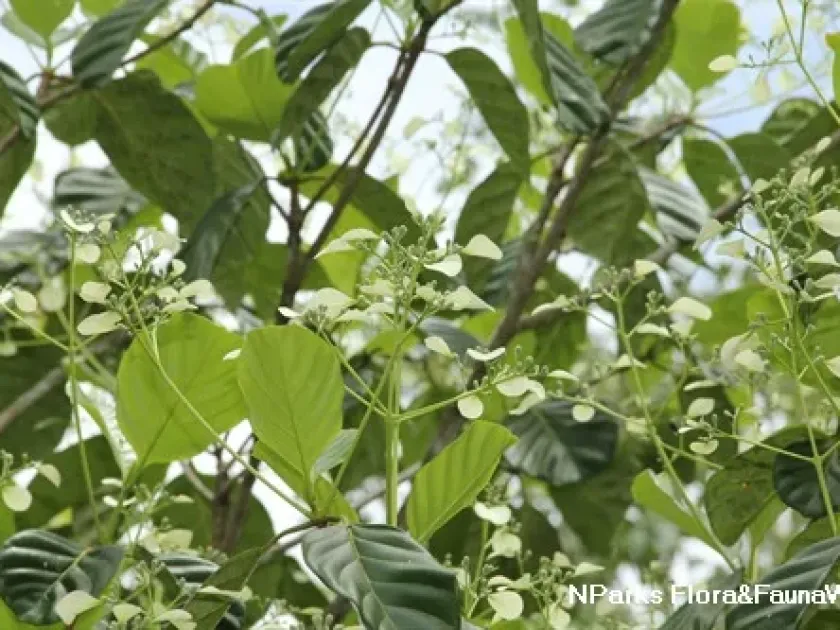
Description
Growing requirements
Mussaendopsis malayana is a tropical tree species belonging to the Rubiaceae family. It is predominantly found in the lowland tropical rainforests of the Malay Peninsula, Sumatra, and Borneo, thriving in the dense, evergreen canopy characteristic of these regions.
The species requires a strictly equatorial climate, defined by high temperatures and consistent, year-round rainfall. It is typically found in alluvial and swampy soil environments, where moisture levels remain high, reflecting its adaptation to poorly drained but nutrient-rich tropical soils.
Botanically, it is classified as a medium to large-sized tree. The leaves are opposite, typical of its family, and the structure of the flowers allows for pollination within the humid forest understory. It exhibits significant vegetative growth, contributing to the biomass of the lowland forests.
From an agronomical and forestry perspective, Mussaendopsis malayana is managed primarily for its timber production. Local forest management practices often involve sustainable harvesting techniques to ensure the renewal of the tree stands within its natural habitat.
The durability of its wood makes it suitable for various construction applications in tropical regions. Understanding the silvicultural requirements of this tree is essential for biodiversity conservation and the sustainable exploitation of local forest resources in Southeast Asia.