
Mussaenda roxburghii
Mussaenda roxburghii
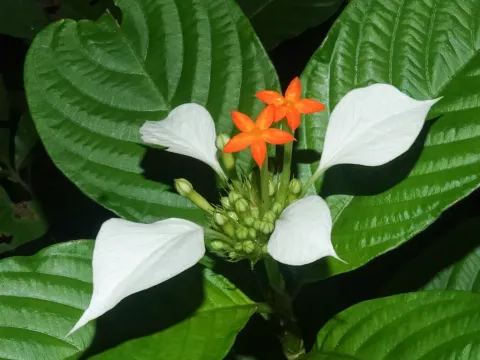
Mussaenda roxburghii is a striking ornamental shrub belonging to the Rubiaceae family. Native to the lush tropical forests of South and Southeast Asia, this species is highly valued for its unique botanical structure, particularly the large, colorful sepals that frame its smaller, star-shaped flowers.
What the section contains
Mussaenda roxburghii
The plant thrives in a tropical climate where temperatures remain consistently between 20°C and 30°C. It is strictly frost-tender; any exposure to cold temperatures or chilly drafts can cause irreversible damage to the foliage and inhibit the flowering process.
Soil requirements are quite specific: it demands a nutrient-rich, acidic to slightly acidic medium that drains exceptionally well. In container cultivation, a mix composed of peat, perlite, and organic compost is recommended to ensure both aeration and moisture retention without waterlogging.
High relative humidity is essential for the healthy development of Mussaenda roxburghii. In drier climates, it is necessary to provide frequent misting or utilize automated fogging systems to maintain the high moisture levels that mimic its natural forest habitat.
Regarding light exposure, the plant performs best in bright, filtered sunlight. While it can tolerate partial shade, insufficient light intensity will result in "leggy" growth and a significant reduction in the vibrancy of the colored bracts, which are its main ornamental feature.
Spider mites are the most common pest problem, especially in indoor or greenhouse settings where the air may become too dry. These microscopic pests settle on the underside of leaves, causing yellowing, stippling, and eventual defoliation if left untreated.
Root rot caused by fungal pathogens such as Pythium and Rhizoctonia poses a severe threat, usually triggered by poor drainage or excessive irrigation. The symptoms include wilting despite moist soil, eventually leading to the death of the entire plant.
Effective management requires a proactive approach, including the application of horticultural oils for pest control and strict adherence to a "dry-between-waterings" cycle for soil management to prevent fungal colonization.
Economically, Mussaenda roxburghii serves a vital role in the ornamental landscaping industry, particularly in tropical regions where it is used to provide vivid color in public parks and botanical gardens.
Beyond aesthetics, the species is studied for its potential in ethnobotanical applications. Some local traditions utilize parts of the plant for their medicinal properties, although its primary commercial value remains strictly within the horticulture and nursery sector.