
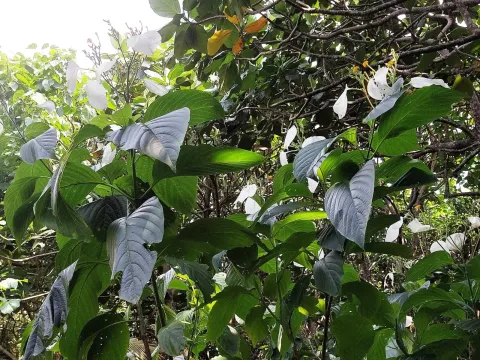
Mussaenda macrophylla
Mussaenda macrophylla
Mussaenda macrophylla is a striking evergreen shrub belonging to the Rubiaceae family. It is widely recognized for its large, pubescent leaves and showy, colorful bracts that surround the small, tubular flowers, making it a prominent feature in tropical landscapes and botanical gardens.
What the section contains
Mussaenda macrophylla
Originating from the tropical regions of the Himalayas and Southeast Asia, this species thrives in warm and humid environments. It requires a climate that remains consistently warm, as it is highly sensitive to cold temperatures and frost, which can cause significant damage to its foliage and stems.
The ideal soil for this crop must be well-drained, fertile, and slightly acidic. When cultivated in containers, a high-quality peat-based mix supplemented with organic matter is recommended. Proper drainage is essential, as the roots are highly susceptible to rot if subjected to waterlogged soil conditions.
Regarding light requirements, the plant prefers bright, indirect sunlight. While it needs significant light intensity to produce its characteristic bracts, intense midday sun can scorch the leaves. Providing light shade during the hottest parts of the day is often necessary for optimal growth.
Management practices include regular moisture maintenance and balanced fertilization during the active growing season. Applying a liquid fertilizer rich in potassium every few weeks encourages vibrant bract development and prolonged flowering, ensuring the plant maintains its aesthetic appeal throughout the season.
The primary pests affecting Mussaenda macrophylla include spider mites and mealybugs, which thrive in indoor or sheltered environments. Early intervention with insecticidal soaps or systemic treatments is vital to prevent extensive damage to the foliage and stunted plant growth.
Fungal issues, particularly root rot, are common if the irrigation regime is not strictly followed. Furthermore, high humidity without adequate ventilation can lead to leaf spot diseases. Keeping the plant in an area with good air circulation is a key preventive measure against these pathogens.