
Mussaenda rivularis
Mussaenda rivularis
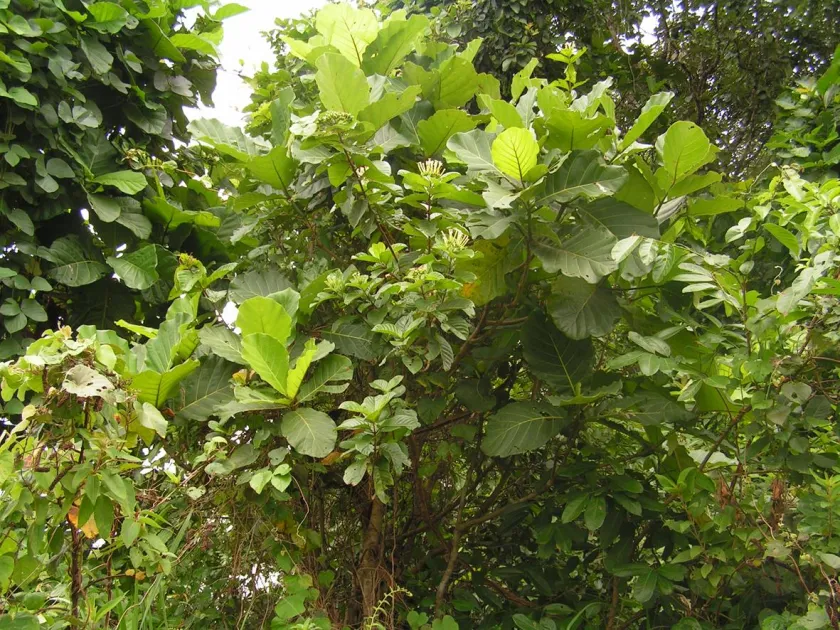
Description
Growing requirements
Mussaenda rivularis is a unique ornamental shrub belonging to the Rubiaceae family. Originally from tropical regions, this plant is naturally adapted to high-humidity environments, frequently occurring near rivers and in densely forested areas.
Botanically, it is known for its distinct foliage and showy inflorescences. The visual impact of the plant is primarily provided by enlarged, petal-like sepals that surround the smaller, tubular true flowers, creating a vivid color display that lasts for several months.
The plant requires a tropical climate with consistently warm temperatures and high relative humidity. Because it is highly sensitive to frost, it is primarily cultivated in controlled environments such as greenhouses, conservatories, or as a specialty indoor plant in temperate regions.
Optimal growth depends on a well-draining, nutrient-rich soil medium. A slightly acidic substrate, commonly composed of peat moss, perlite, and organic compost, is recommended to ensure proper root development and prevent the risk of waterlogging.
In terms of agricultural and horticultural utility, Mussaenda rivularis is highly valued in landscape architecture within tropical zones for decorative hedges. Elsewhere, it is cultivated by botanical gardens and plant enthusiasts for its exotic appearance and structural elegance.
Main diseases and pests
Spider mites are considered the most common pests affecting this species, particularly when the ambient humidity drops below the levels required for healthy growth.
Mealybugs are another recurring problem, often settling on the undersides of leaves and in the nodes, where they extract sap and weaken the plant's structural integrity.
Root rot remains the most significant pathological threat, typically induced by poor drainage, overwatering, or cultivating the plant in compacted, non-porous soil.
Fungal leaf spot diseases may appear if there is insufficient air circulation around the canopy, which allows pathogens to thrive in the dense foliage of the plant.
Effective management includes regular monitoring for early signs of infestations, proper irrigation scheduling, and the application of balanced systemic fungicides or insecticides when necessary.