
Hydnophytum formicarum
Hydnophytum formicarum
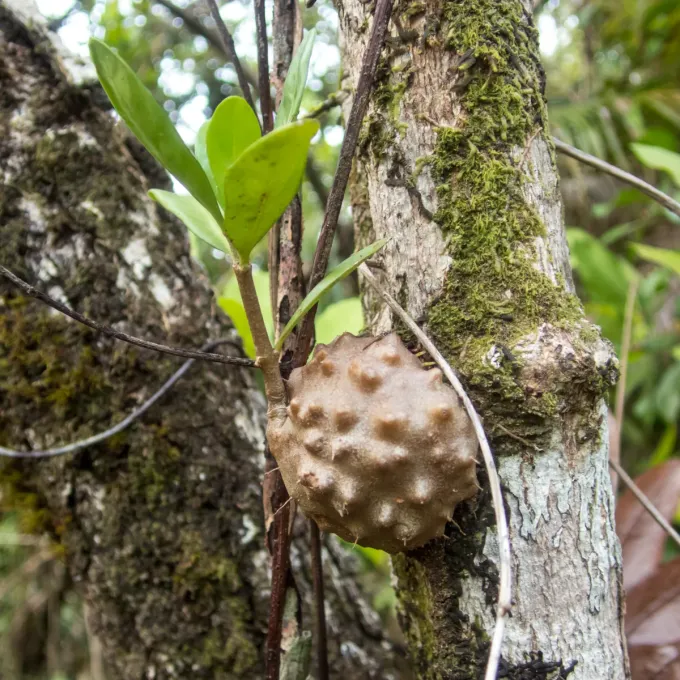
Description
Growing requirements
Hydnophytum formicarum, commonly known as the ant plant, is a fascinating member of the Rubiaceae family. This species is an epiphytic plant that thrives in the tropical canopy of Southeast Asia, where it anchors itself to host trees.
The plant is distinguished by its enlarged, tuberous stem known as a caudex. Internally, this caudex is honeycombed with chambers that serve as a habitat for ant colonies, creating a mutualistic relationship where the ants provide defense and nutrients to the plant.
In cultivation, these plants require a high-humidity environment. Maintaining humidity levels between 70% and 80% is crucial for the development of the caudex and overall plant health, making them excellent candidates for humid terrariums.
The potting medium must be extremely well-draining, similar to that used for epiphytic orchids. A mix of pine bark, charcoal, perlite, and a small portion of sphagnum moss provides the aeration required for the roots to breathe.
Proper lighting is essential; the plant requires bright, filtered light to maintain its compact form and health. Insufficient light results in elongated, weak stems, while excessive sun exposure leads to scorched epidermis on the caudex.
Main diseases and pests
Hydnophytum formicarum is primarily susceptible to mealybugs and scale insects. These pests often congregate in the crevices of the caudex or the undersides of leaves, making manual removal necessary for effective management.
Root and caudex rot represent the most significant threats to the survival of the plant. These conditions are almost always caused by waterlogging the substrate or failing to provide sufficient drainage, allowing pathogens to infiltrate the internal chambers.
Fungal infections can spread rapidly throughout the fleshy tissues if the ambient temperature is too low in combination with high moisture. Maintaining a consistent temperature above 22 degrees Celsius is a preventative measure against such outbreaks.
Proper airflow is paramount to prevent the colonization of the plant's surface by mold or bacteria. Using a small fan or positioning the plant where natural ventilation occurs can significantly lower the risk of infection.
When chemical treatment is required, ensure that the chosen insecticide is specifically formulated for succulents or epiphytes to avoid damaging the specialized tissue of the caudex.